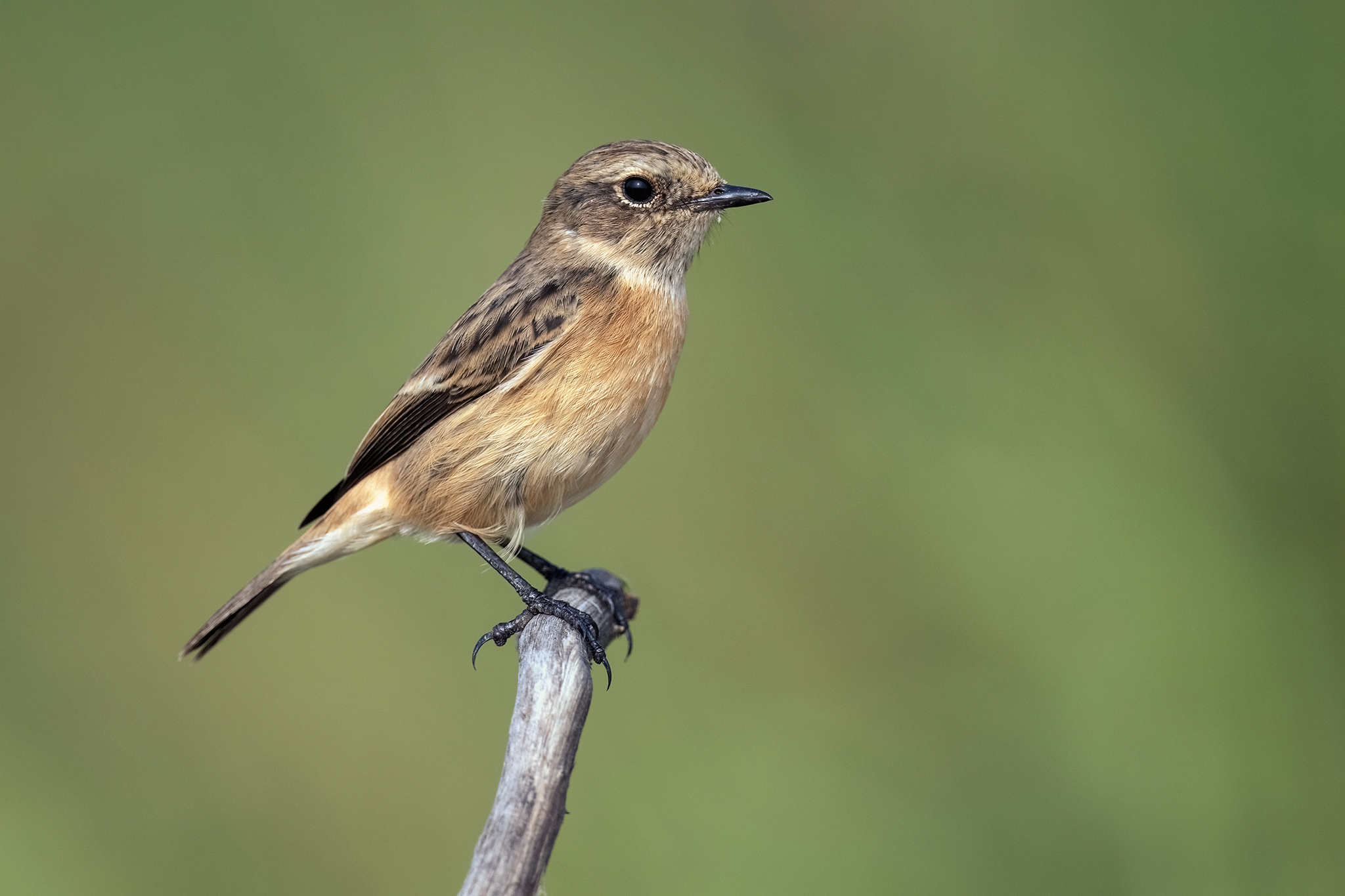



| The
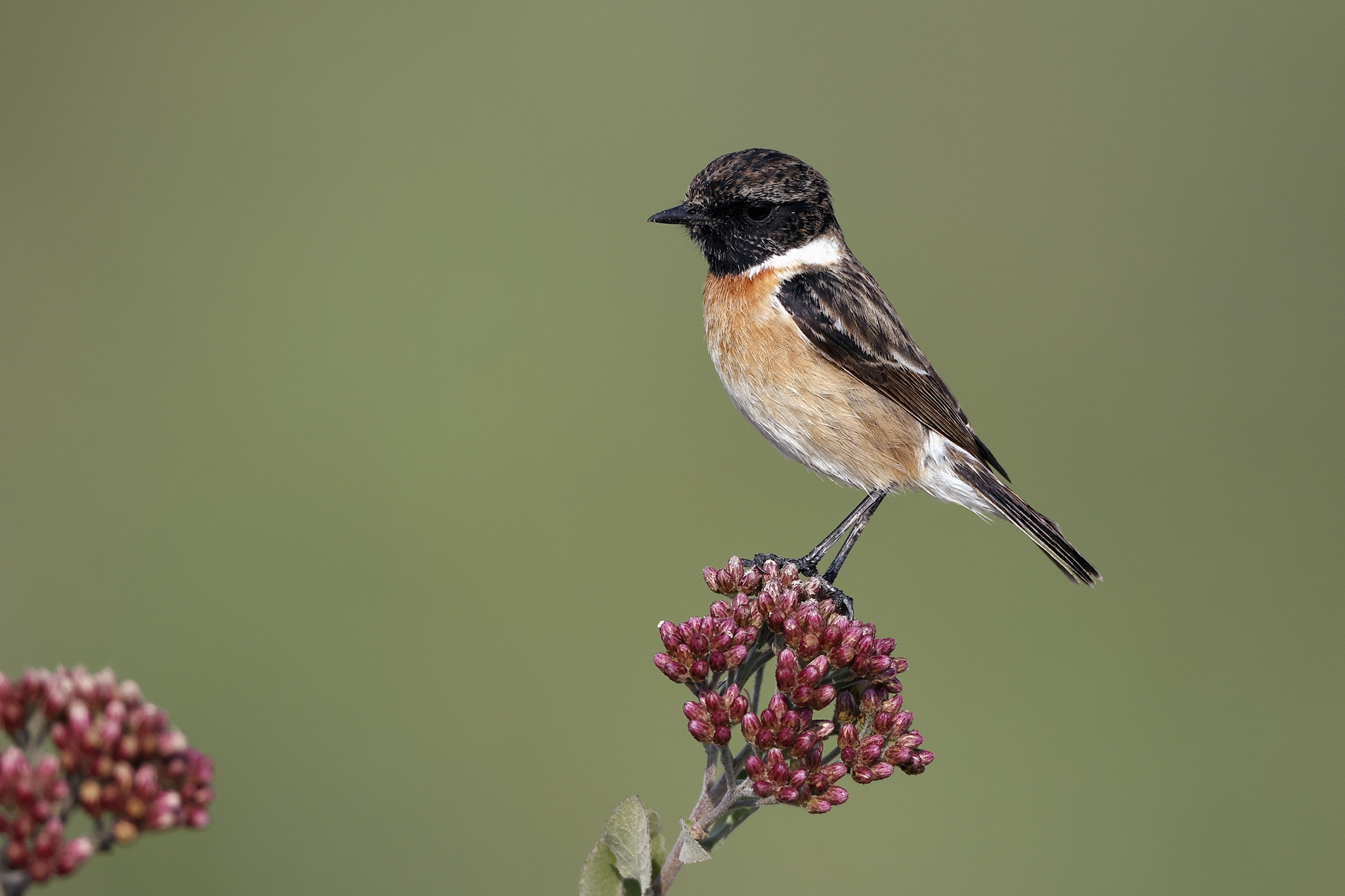
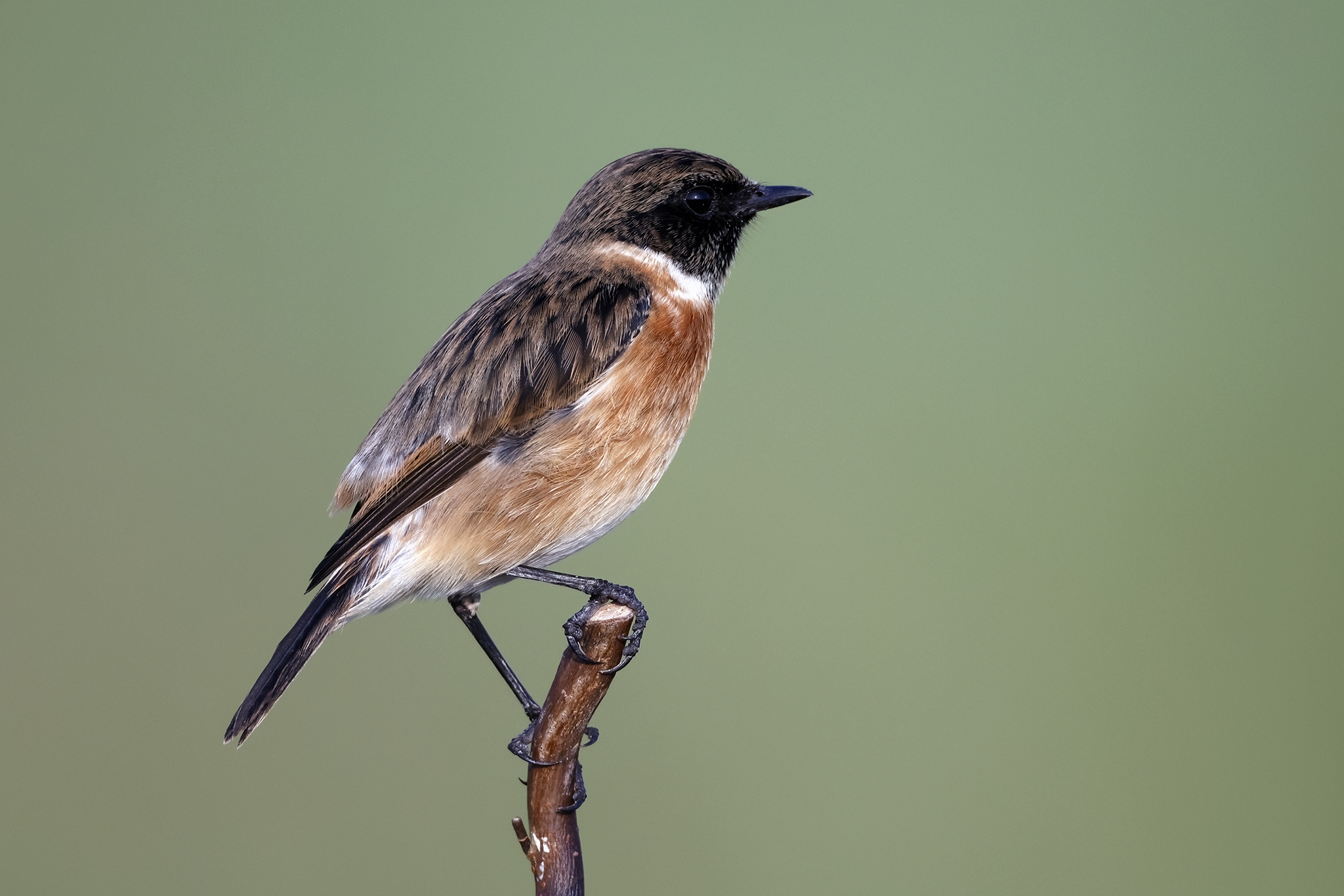
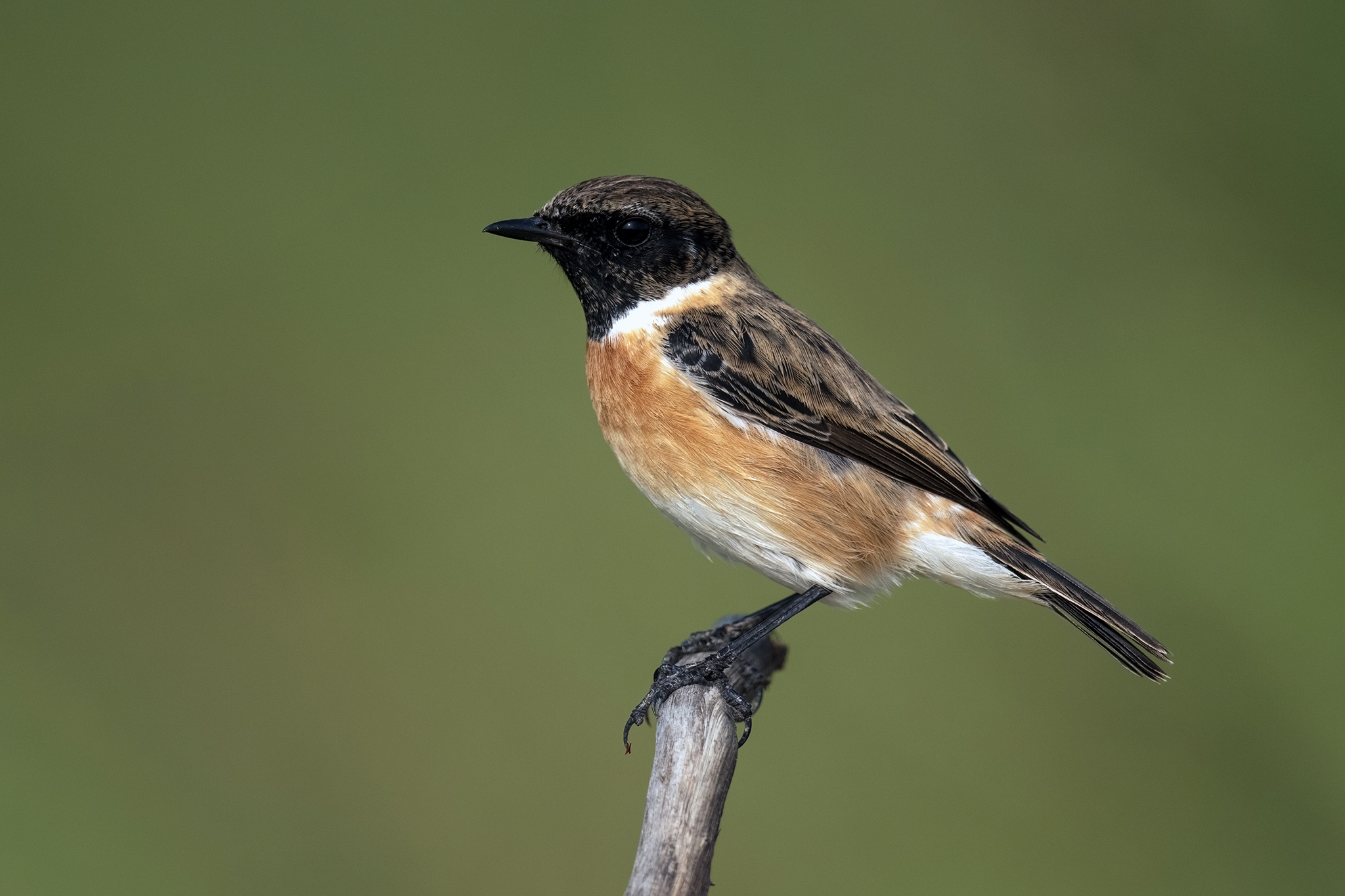
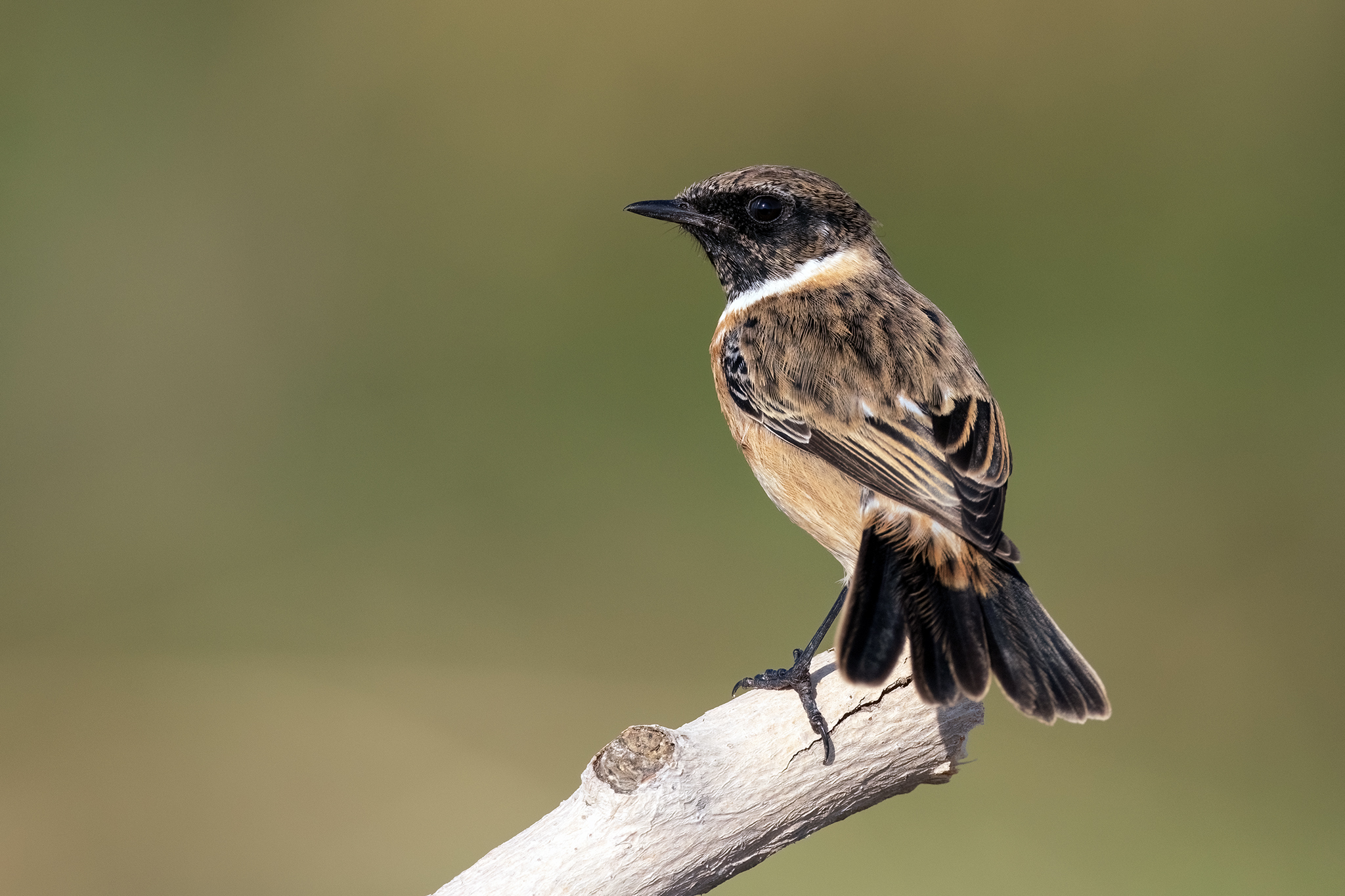
European Stonechat is a winter visitor and spring and autumn migrant. It is
commonly found in parks and farmlands. Four forms of Stonechat occur in the
region—European, Siberian, South Caspian, and North Caspian. These forms vary
in the amount of white in the tail (similar to the Whinchat), red and white
on the underparts, and shades of darkness on the underparts. Research is
needed to determine the prevalence of each form in Qatar. The closely related
Siberian Stonechat (Saxicola maurus) also visits the region, and both species
are challenging to distinguish. Male Siberian Stonechats show more extensive
white coloration and less rufous underparts than European Stonechats. Habitat & Behavior Stonechats are often seen perched conspicuously on posts or the tops of bushes, flicking their wings while keeping a lookout for insects. They dart to the ground to capture prey and typically return to the same or a nearby perch. These birds prefer open areas with bushes, providing clear views for hunting. Appearance & Physical Characteristics European Stonechat: Displays darker underparts with a dark throat. Siberian Stonechat: Shows a pale throat and more extensive white coloration, especially in males. Females of Both Species: Duller in color compared to males, with only subtle differences between the two forms. Tail and Underparts: All forms show variation in the amount of white on the tail and shades of red and white on the underparts, depending on the form. Call Stonechats are known for their sharp, clicking calls, reminiscent of two stones being tapped together, which is the origin of their name "Stonechat." Their songs also include a high-pitched, melodic warble, often ending in a loud crescendo. Size and Comparison Stonechats are small, compact birds, slightly larger than warblers. Their upright posture, behavior, and sharp features make them easily recognizable. Seasonal Presence The European Stonechat is a regular winter visitor and passage migrant, particularly observed from October to March, while the Siberian Stonechat shares a similar migration pattern. |





© 2026 Qatar Bird Observation Group