



| The
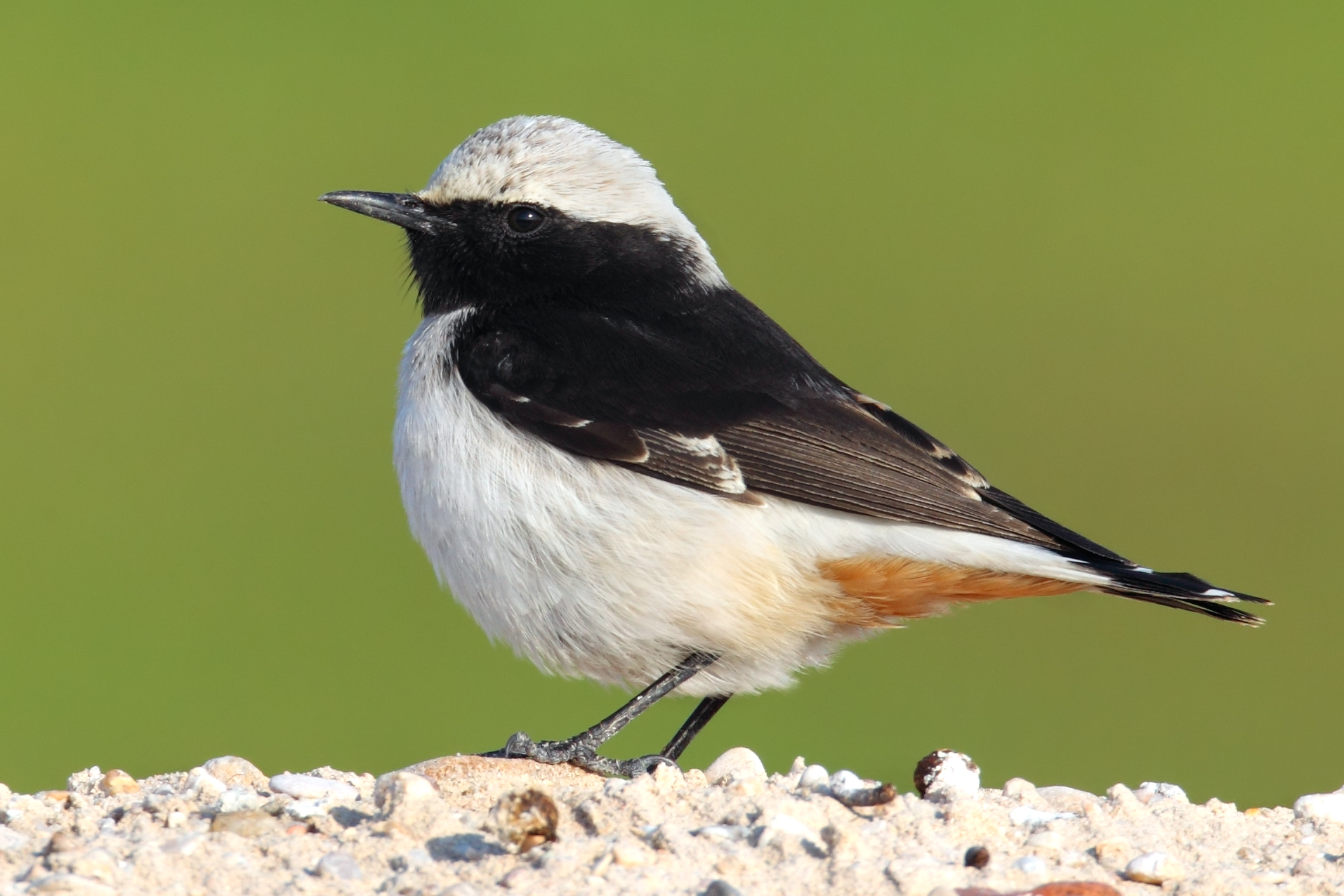
Eastern Mourning Wheatear is a slender and graceful bird, known as a scarce
winter visitor to Qatar. The species' name reflects the male's dark,
cloak-like coloration on its back, wings, and head. Habitat & Behavior This bird is typically found in open country and semi-desert landscapes. It often perches on isolated trees, fences, or wires. Its feeding behavior includes catching airborne insects and diving to the ground to capture beetles or larvae. Appearance & Physical Characteristics Male: Notable for its dark, "mourning cloak" appearance, with sooty-black coloration on the back, wings, and head. It has a whitish crown and white underparts that transition to a buff shade under the tail. Female: Brown overall, with buff-toned underparts and a blackish bib. Call The Eastern Mourning Wheatear (Oenanthe lugens) is known for its vocalizations, which include a soft, flutey, and musical song. Males typically deliver this song from prominent perches, such as rocks, or during flight displays,a common textual representation for wheatear calls might look like "Phew-phew-phew-churr-churr-phew", Occasionally interspersed with trills or descending whistling phrases like "tseee-phee-choor." Size and Comparison The Eastern Mourning Wheatear is slim and delicate in build, fitting within the wheatear family. Its distinct features and behaviors set it apart from other wheatear species. Seasonal Presence This bird is a rare winter visitor, observed mainly between December and February. |





© 2026 Qatar Bird Observation Group