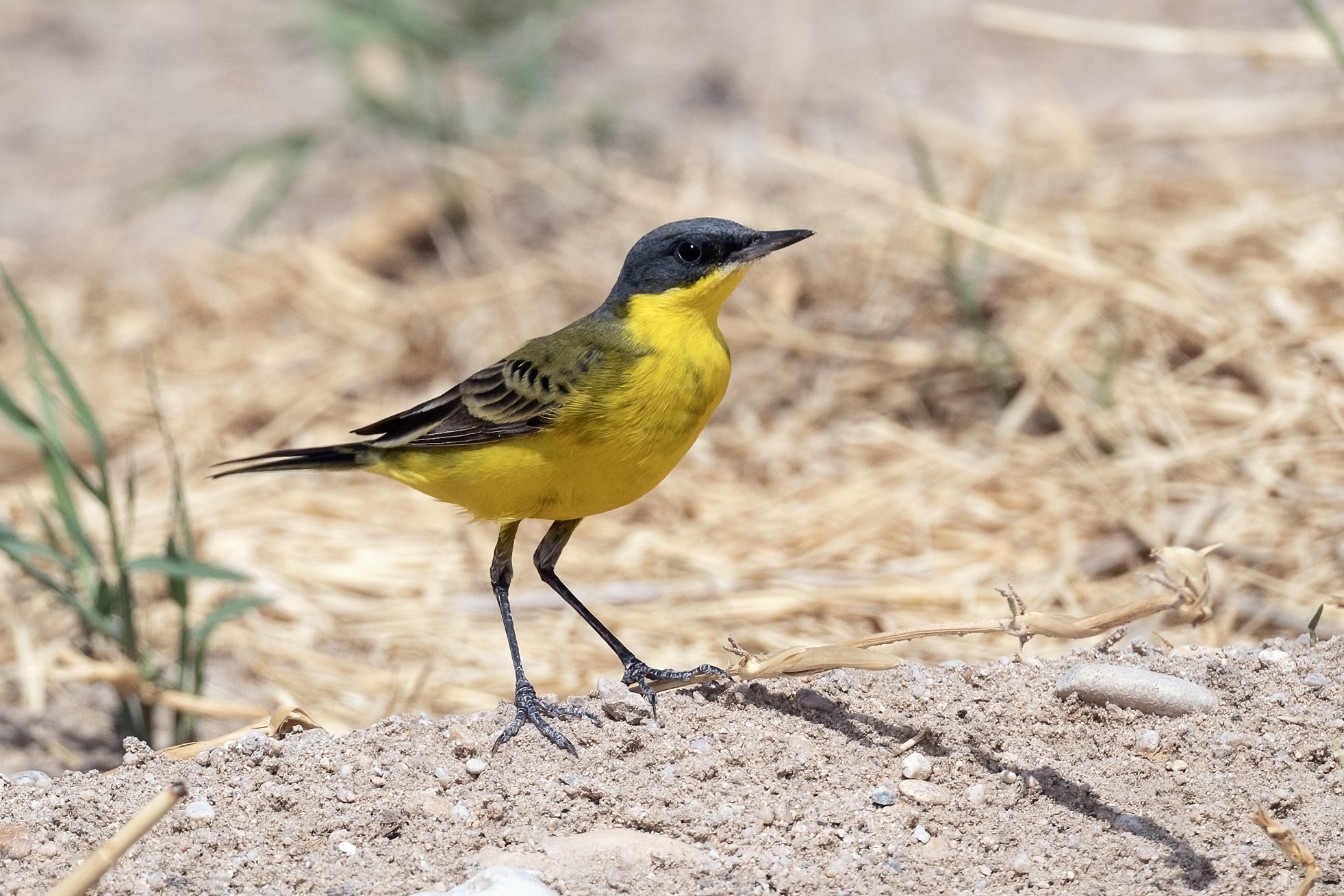




| The
Yellow Wagtail is a vibrant and active passage migrant in Qatar, observed
during spring and autumn migrations. It displays a variety of striking
plumage patterns linked to its diverse subspecies, which represent different
breeding populations. This wagtail is commonly found in moist fields and
wetlands, foraging for insects. Habitat & Behavior: Found in farmlands, muddy wetland edges, and areas rich in insect life. Frequently seen at the vegetation edges of water bodies or moist fields. Forages actively on the ground, walking briskly and constantly wagging its tail. Often spotted feeding on insects, moving through open areas in large flocks during migration. Migrates in substantial numbers, with different races passing through Qatar in succession. Appearance & Physical Characteristics: Plumage: Males in Spring: Exhibit vibrant yellow underparts, olive-green crown and mantle, and dark wing primaries. Head colors vary significantly by subspecies, with some showing black, blue, grey, or white heads. Females and Autumn Birds: Uniformly duller in color, with paler yellow or buff underparts. A sandy or buff overall tone may occur in certain individuals. Legs: Slender, black legs aid in quick and precise movements. Tail: A long, slender tail, characteristic of wagtails, often wagged while foraging. Call The Yellow Wagtail produces a high-pitched "tsit" or "tsee," a distinctive sound often heard during flight or while foraging in flocks. Size and Comparison: A small, slender bird with long legs and tail, it is smaller and more delicate compared to larger wagtails. Known for its constant tail-wagging behavior, which helps distinguish it from other small ground-feeding birds. Seasonal Presence: Spring Migration: Active from March to May, peaking in April and May when males display their vibrant breeding plumage. Autumn Migration: Observed from September to October, as birds travel southward for the winter. The Yellow Wagtail is a dynamic and colorful presence during its migratory visits to Qatar. Its wide range of subspecies and diverse plumages, combined with its energetic foraging behavior, make it a fascinating bird to observe in farmlands and wetlands. |





© 2026 Qatar Bird Observation Group