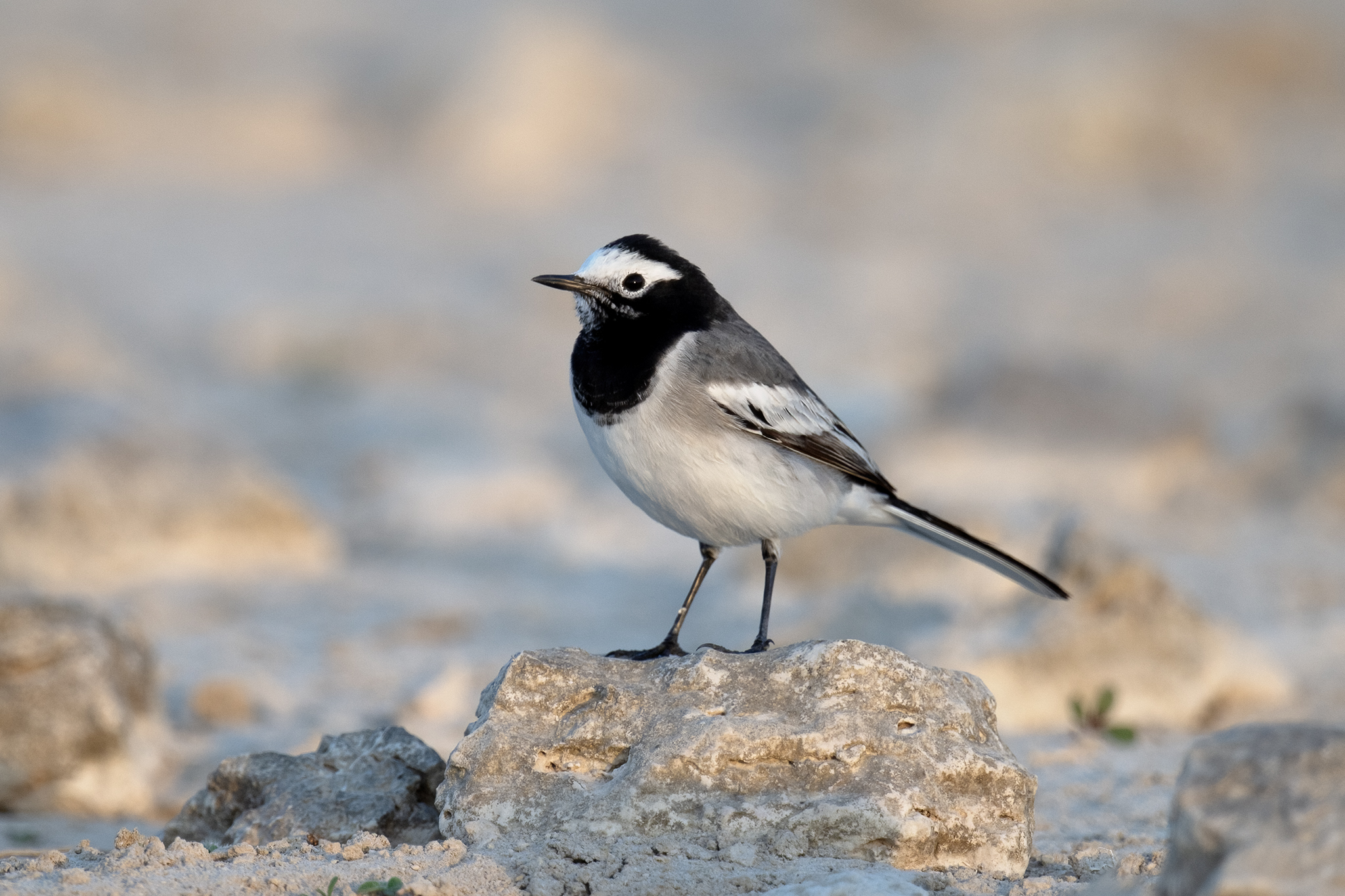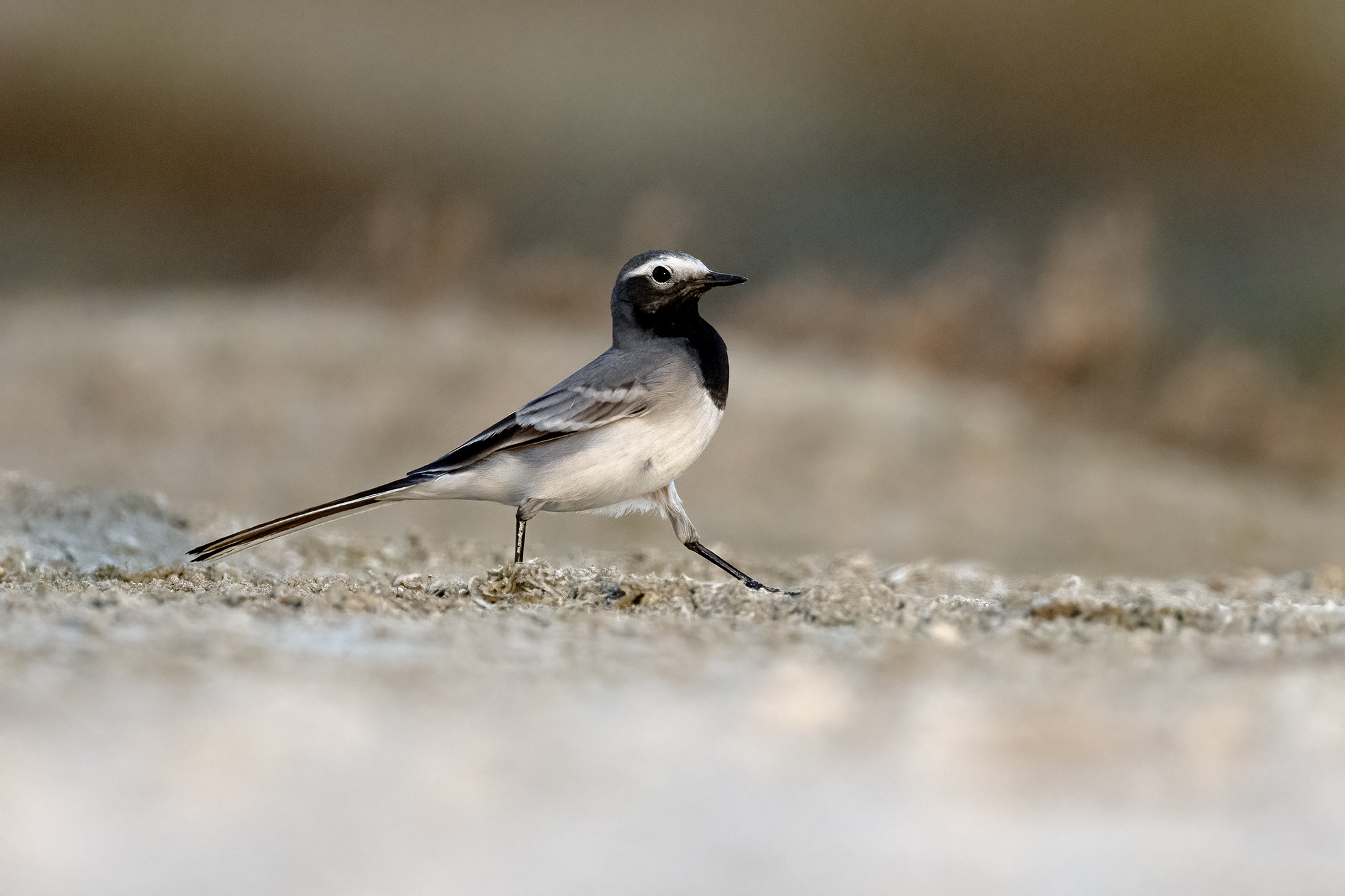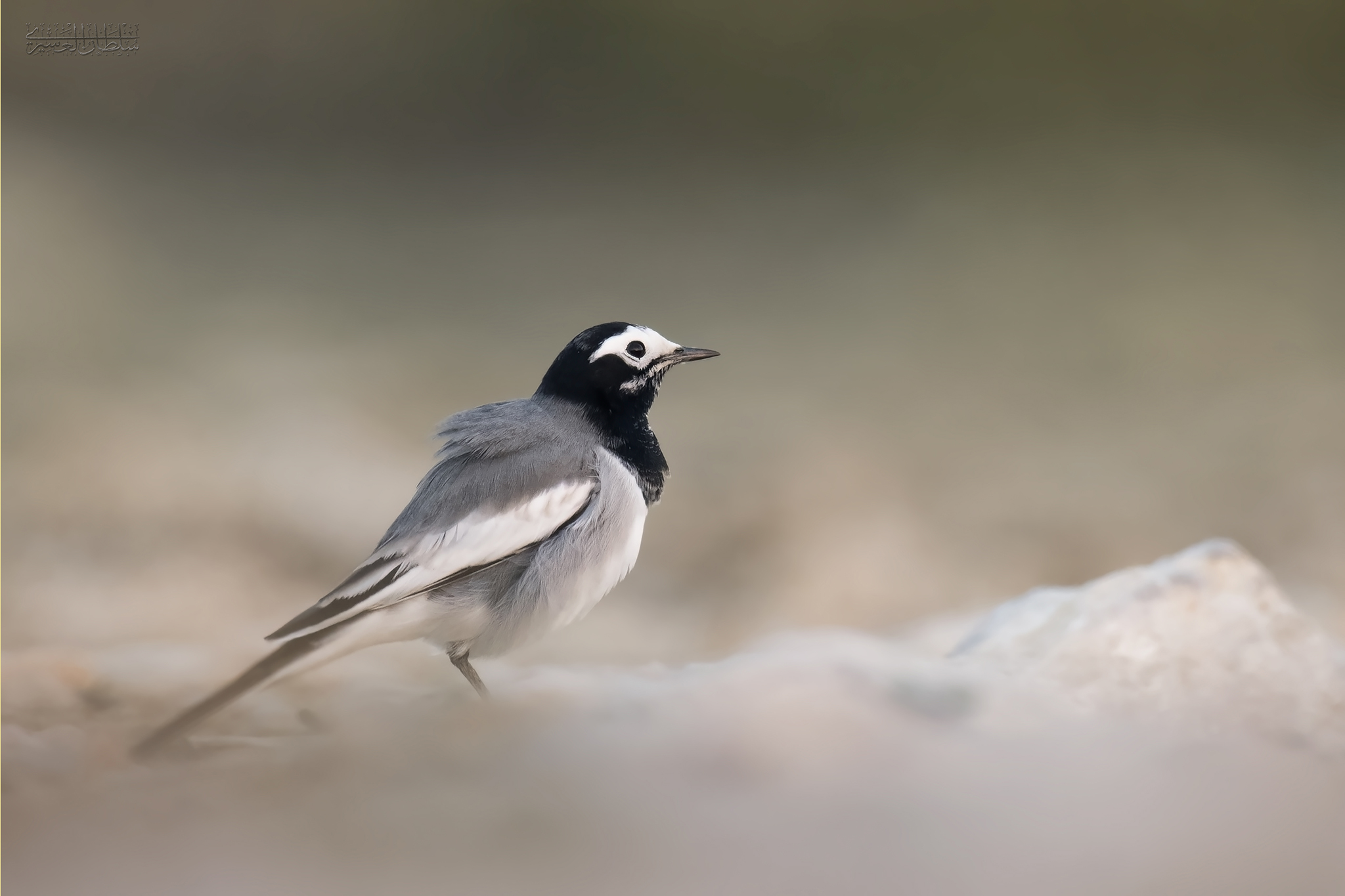




| The
Masked Wagtail is the less common and widespread wagtail species in Qatar,
serving as a spring and autumn passage migrant and winter visitor. It is
highly adaptable, thriving in both urban and rural environments. Known for
its tail-wagging habit, it actively forages on the ground for insects and
occasionally catches flies mid-air. Habitat & Behavior Preferred Habitats: Found in farmlands, wetlands, coastal lagoons, parks, gardens, and even car parks. Frequently seen in urban areas like the Doha Corniche, adapting well to human-modified landscapes. Behavior: Forages on the ground, constantly wagging its tail while searching for insects such as ants. Occasionally catches flying insects mid-air, similar to flycatchers. Found singly, in pairs, or small flocks, often busily scurrying around open spaces. Appearance & Physical Characteristics: Plumage: Winter: Appears duller with softer grey tones. Spring: Features more distinct markings, including a black throat, crown, and nape, with a pure white face surrounding the black eye. A contrasting black, grey, and white pattern throughout the year. Sex Differences: Females are greyer and less striking compared to males. Call The White Wagtail produces a sharp and distinctive "chit-chit" sound, which is often heard while it forages or during flight. Size and Comparison: A small, slender bird with a long tail that is constantly wagged. Easily recognizable due to its bold black-and-white plumage, setting it apart from other wagtail species. Seasonal Presence: Spring and Autumn Migration: Active during March, April, September, and October. Winter Visitor: Present from November to April, with peak activity in cooler months. |





© 2026 Qatar Bird Observation Group