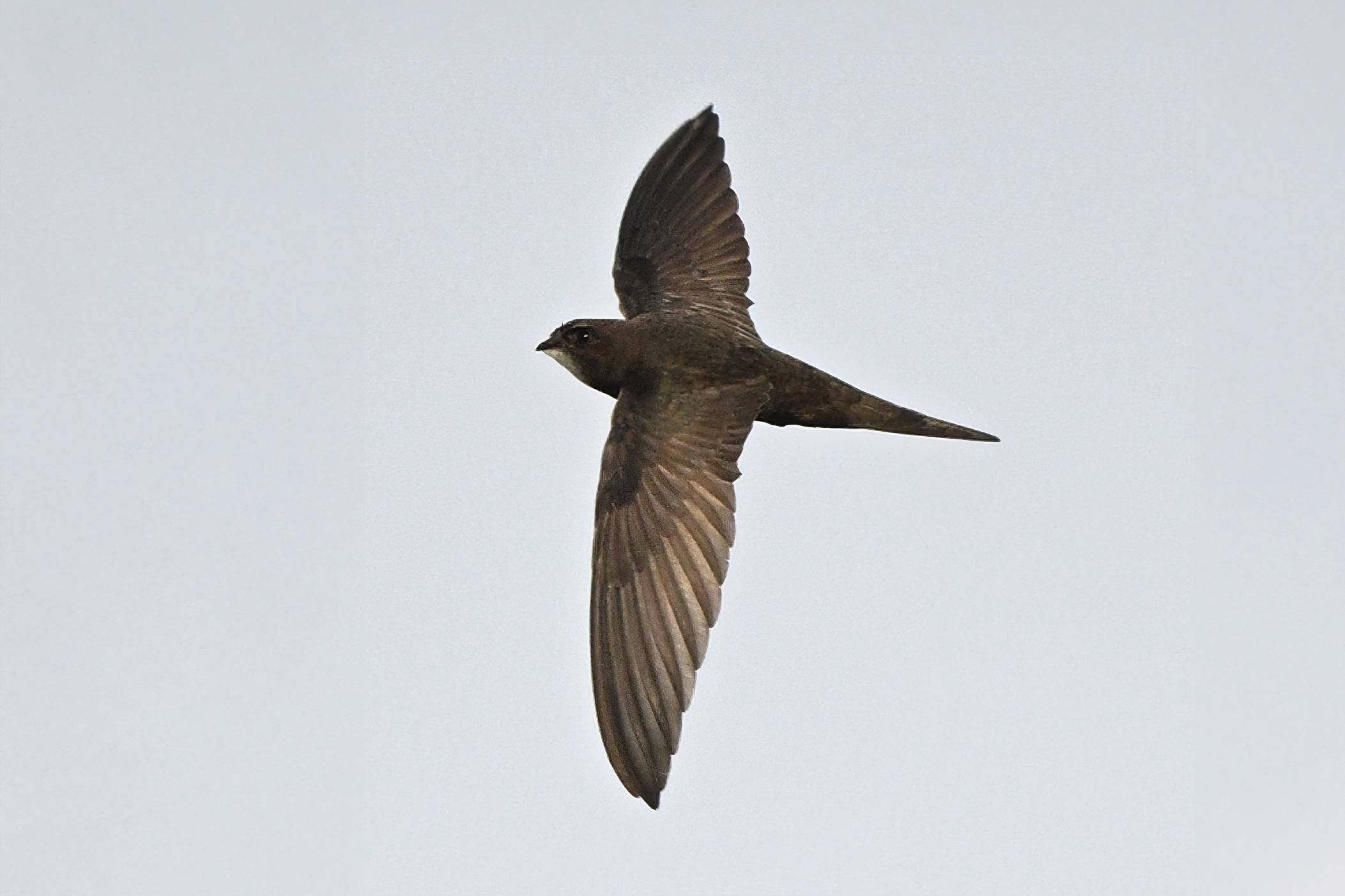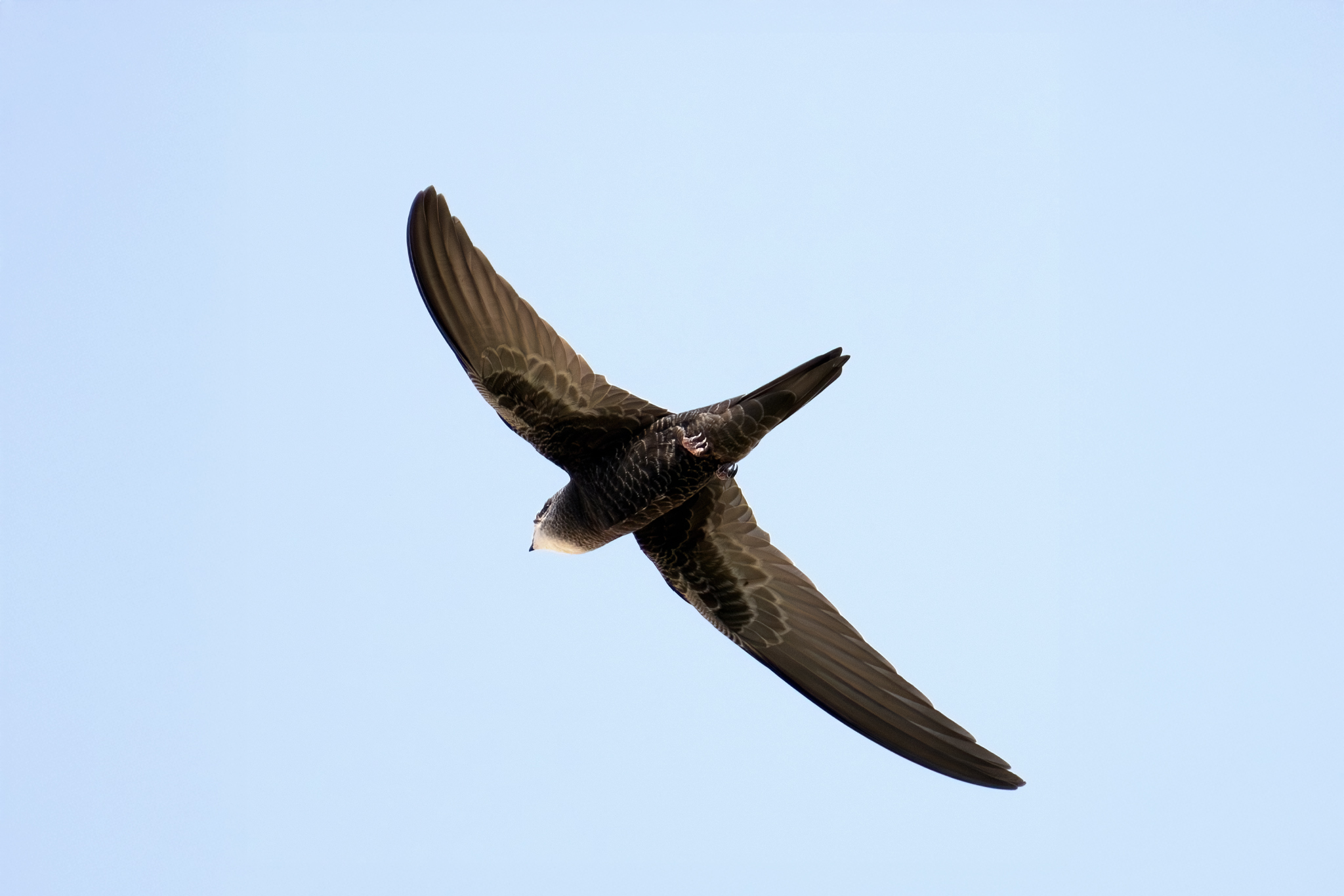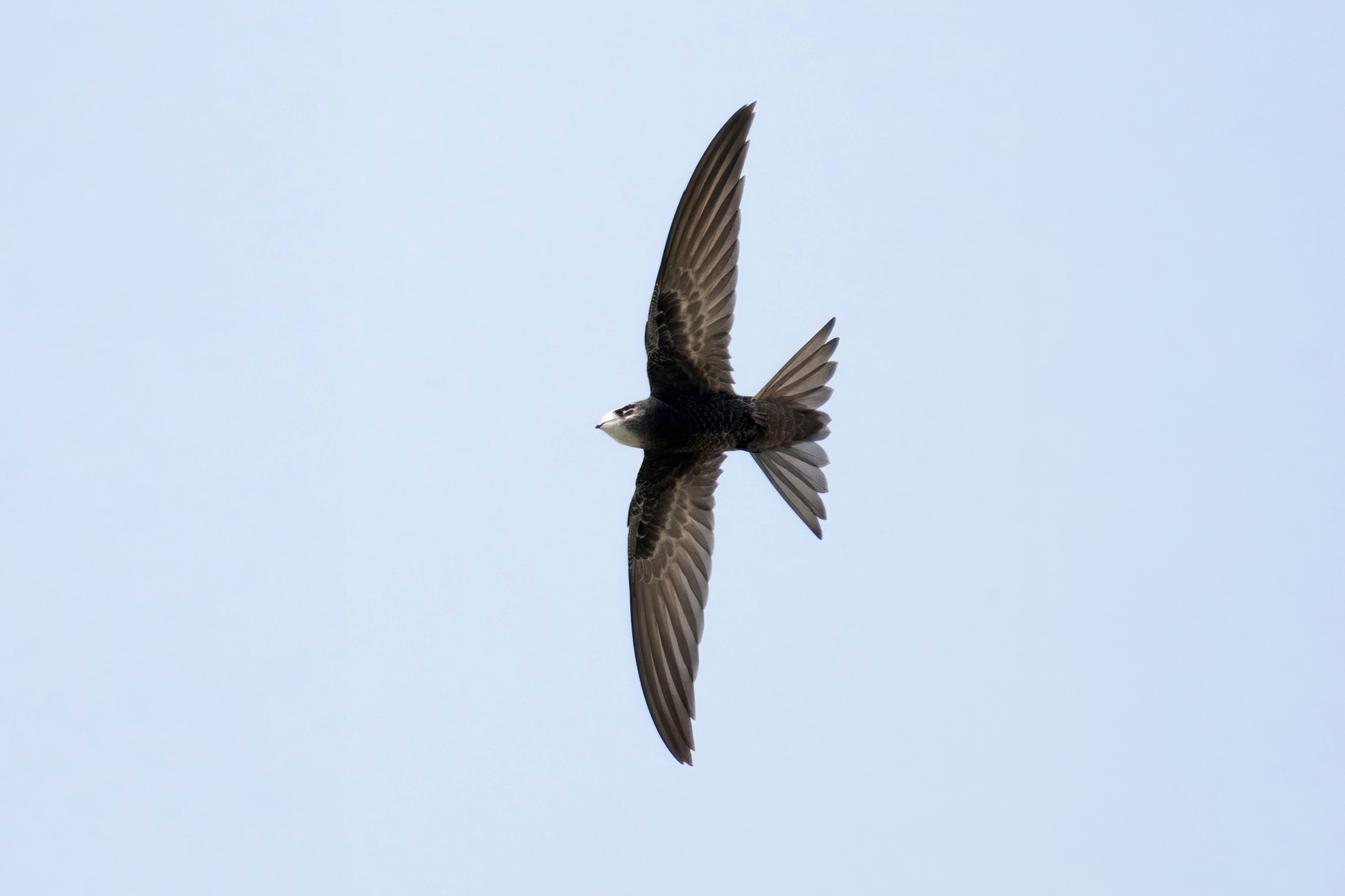




| The
Common Swift (Apus apus) is a migratory bird known for its aerial lifestyle,
spending much of its life in flight. They are closely related to the Pallid
Swift.The scientific name comes from a Greek word meaning 'without feet' as
these birds are hardly ever seen perching, and even drink, mate and sleep on
the wing. Habitat & Behavior Common Swifts prefer open skies over wetlands, lagoons, and farmlands, feeding on airborne insects. They are fast and agile, rarely seen perching. Key areas in the Middle East include regions like Al Khor and Abu Nakhla. Appearance & Physical Characteristics They have dark plumage with long, crescent-shaped wings that remain extended during flight strokes. Their underside is also dark, distinguishing them from swallows and martins. Call Common Swifts produce high-pitched, screaming calls, often heard during flight. Their calls are described as "sriii-sriii," especially noticeable in summer evenings. Size and Comparison These birds are slightly larger and more robust than swallows, with distinctive wing shapes suited for their lifestyle. Seasonal Presence In the Middle East, they are typically seen during migration from March to May. Migration Path : The Common Swift (Apus apus) undertakes extensive migratory journeys between its breeding grounds in Europe and Asia and its wintering areas in Africa. During migration, these birds traverse the Middle East, including regions like Qatar. Autumn Migration: Route: After the breeding season, Common Swifts depart from Europe and Asia, heading southward. They often pass through the Middle East, utilizing flyways that include countries such as Qatar. Their journey continues over the Red Sea and into Africa. Stopovers: During this migration, swifts may utilize various stopover sites in the Middle East to rest and feed, taking advantage of areas rich in airborne insects. Spring Migration: Route: In the spring, Common Swifts embark on their return journey northward. They traverse the Middle East once again, including regions like Qatar, as they head back to their breeding territories. Timing: The return migration typically occurs from late April to early May, with swifts arriving in their breeding areas shortly thereafter. |





© 2026 Qatar Bird Observation Group