





| General
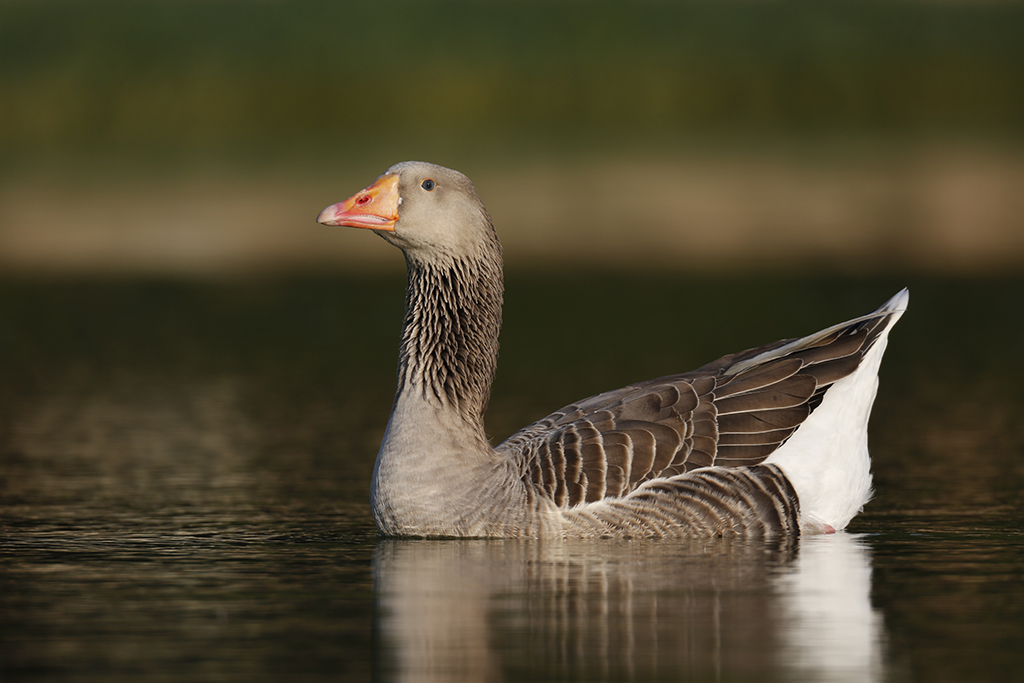
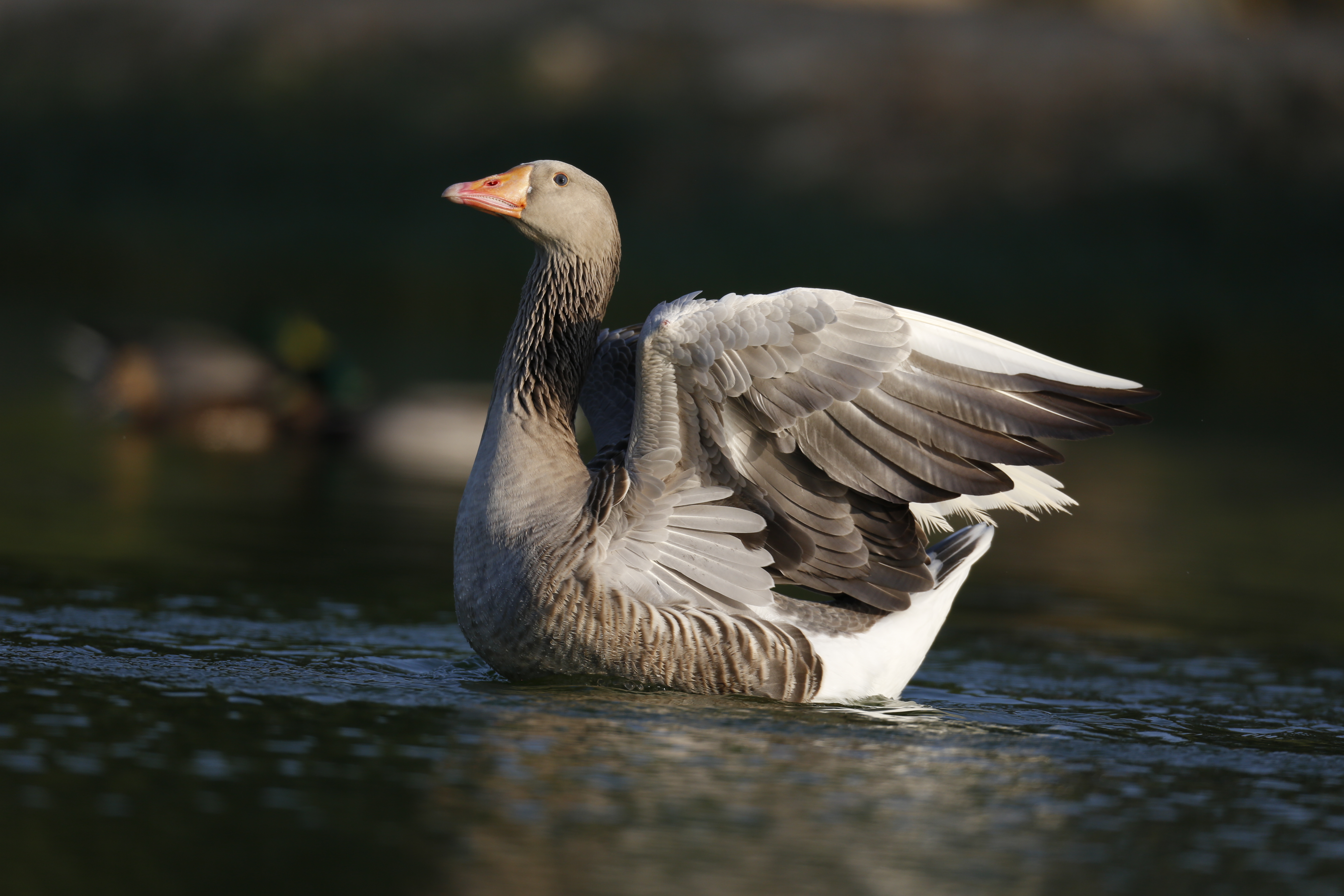
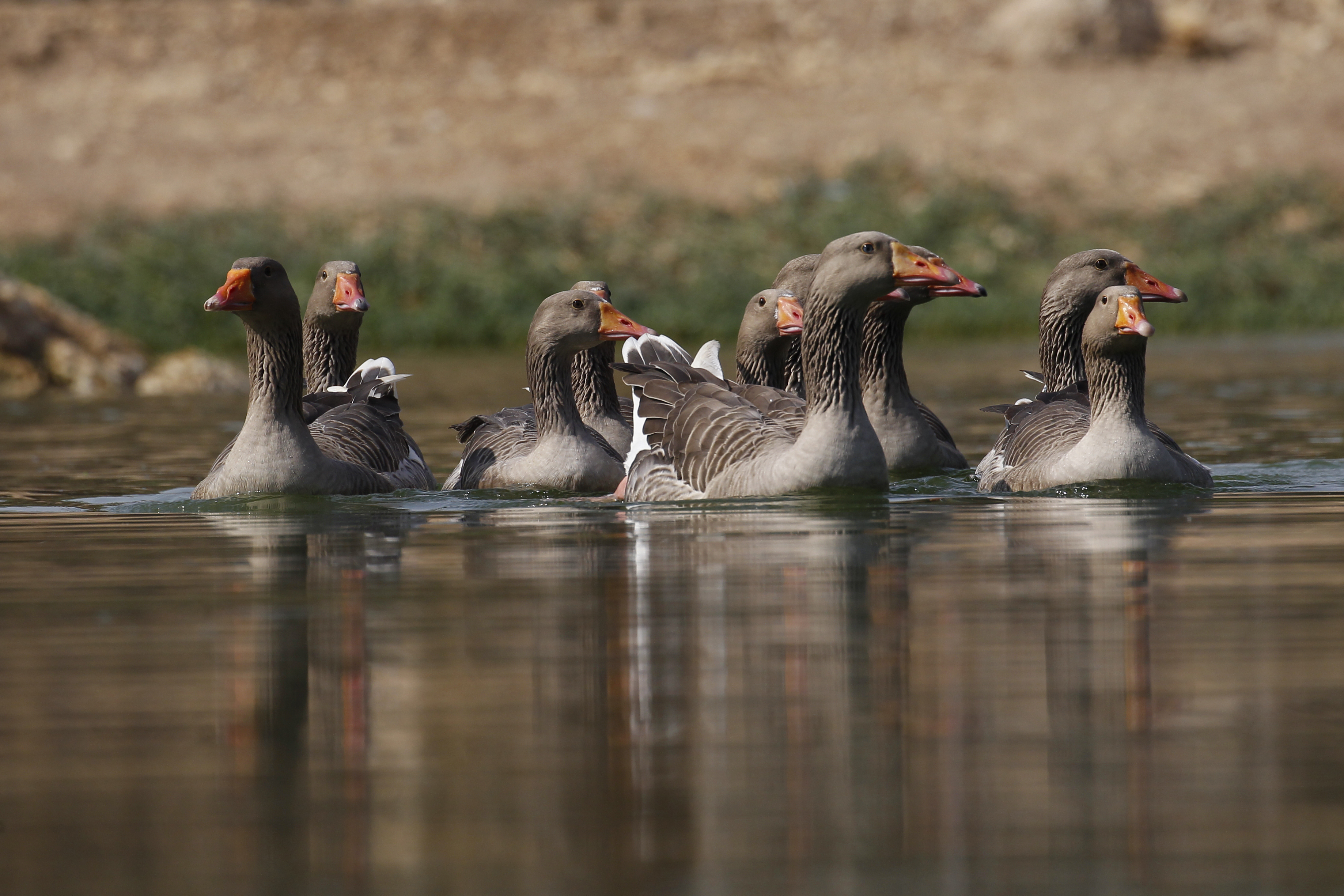
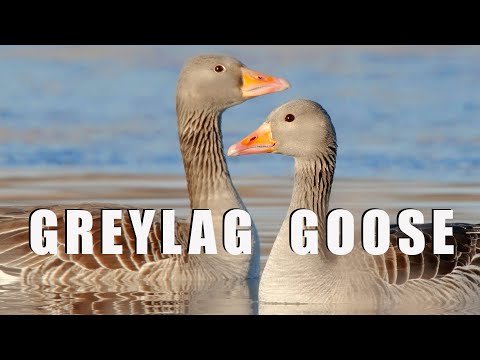
Appearance The Greylag Goose is a large, bulky goose and is considered the ancestor of most domestic geese. Size: Length about 74–91 cm; wingspan 147–180 cm; weight 2.5–4.1 kg. Plumage: Overall grey-brown with paler underparts. Bill: Stout, orange or pinkish in color. Legs: Pinkish or orange. Markings: Pale fringes on feathers give it a scaly appearance; belly often shows irregular black bars. Key Identification Features Large head and thick neck compared to other geese. White or pale grey face and underparts, blending gradually with grey-brown upperparts. Wings broad, upperwing pale with contrasting darker flight feathers. In flight, shows a strong, steady wingbeat with a slightly wedge-shaped formation when in flocks. Habitat Prefers wetlands, lakes, rivers, marshes, and agricultural fields. Breeds in northern and central Europe and Asia; winters in southern Europe, North Africa, Middle East, and parts of Asia. Often associated with farmlands during migration and winter, where it feeds on crops and grasses. Behavior Gregarious and social, especially outside the breeding season, forming large flocks. Often mixes with other goose species in wintering grounds. Feeds mainly on grasses, roots, seeds, and crops (like cereals and potatoes). Diurnal feeder but may also graze at night in areas of disturbance. Voice Loud, nasal “aang” or “gagging” honk, lower-pitched and harsher compared to domestic geese. Calls often given in chorus during flight, sounding noisy and carrying over long distances. Breeding Nests on the ground near water, hidden among reeds or grasses. Lays 4–6 creamy white eggs; incubation about 27–28 days by the female. Both parents guard the goslings, which can swim and feed themselves soon after hatching. Conservation Status Listed as Least Concern by the IUCN due to wide distribution and stable populations. However, in some regions, populations are affected by hunting pressure and habitat loss. |





© 2026 Qatar Bird Observation Group
