



| The
Eastern Olivaceous Warbler is a medium-sized warbler and regular passage
migrant, typically observed during spring and autumn in small numbers. Its
drab grey and pale brown plumage, small size, and shy behavior make it one of
the most inconspicuous birds. It is often found high in the canopy of trees
and tall bushes, flitting silently from branch to branch. This bird rarely
comes to the ground and usually only flies when disturbed. It feeds quietly
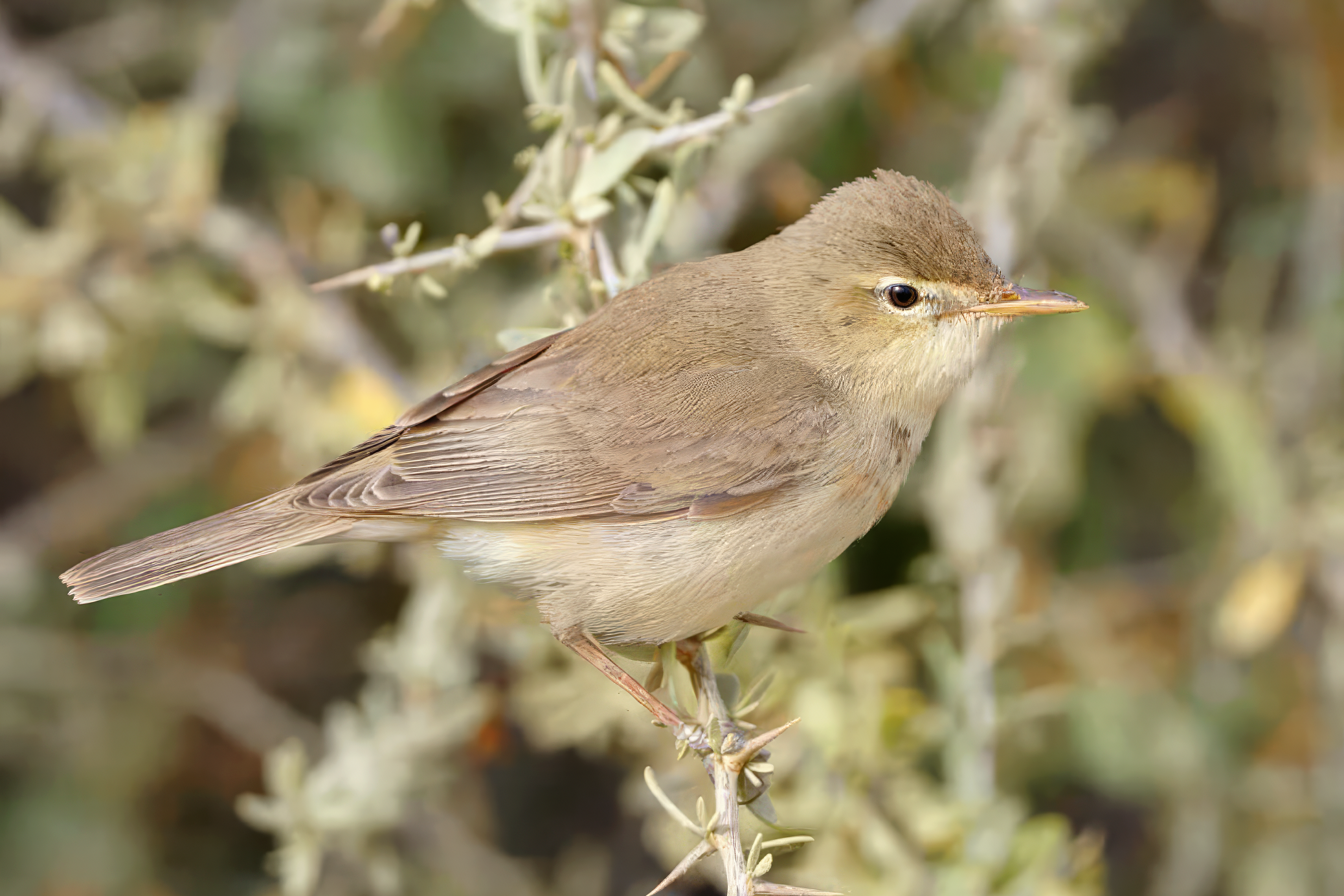
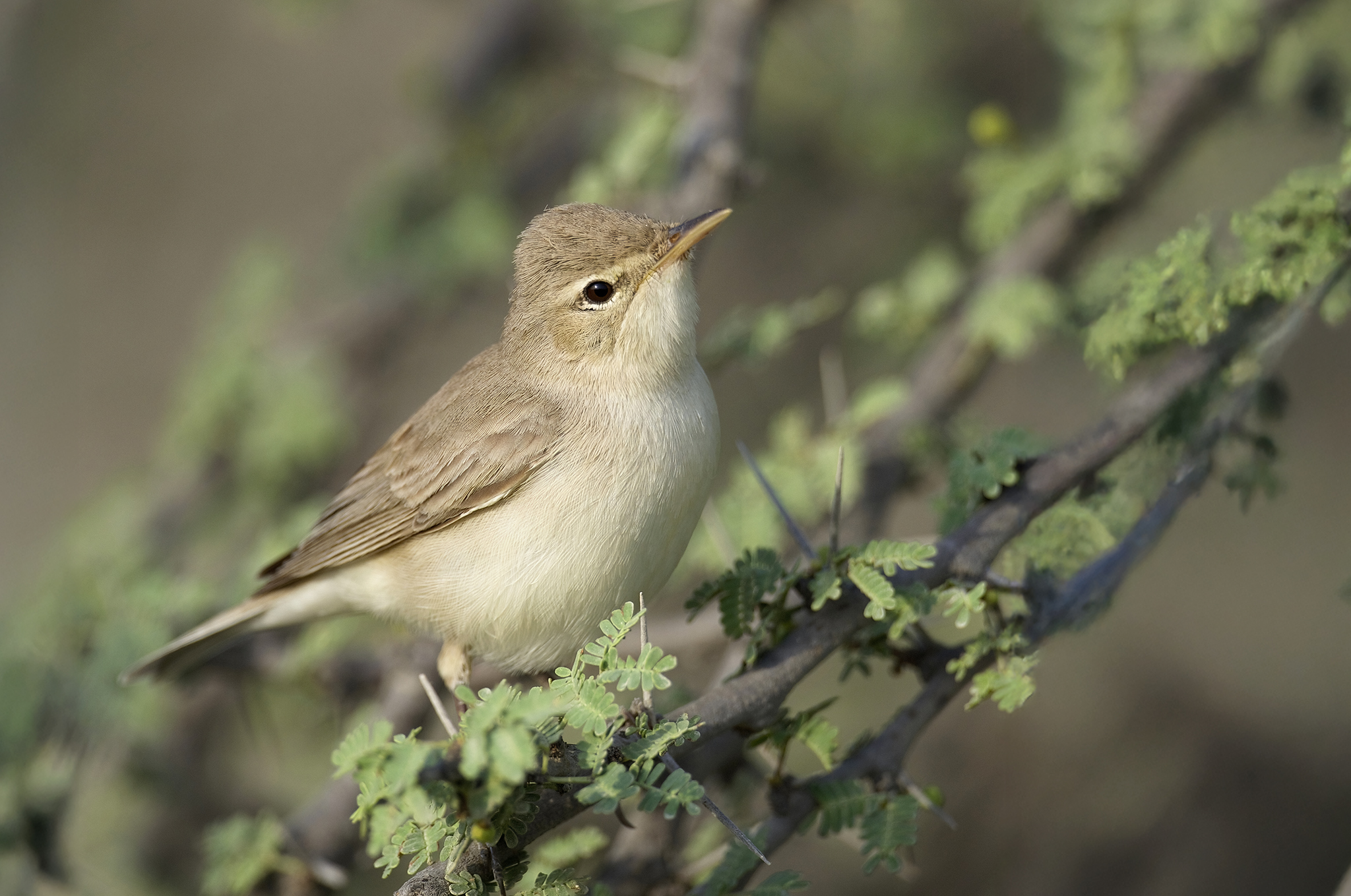
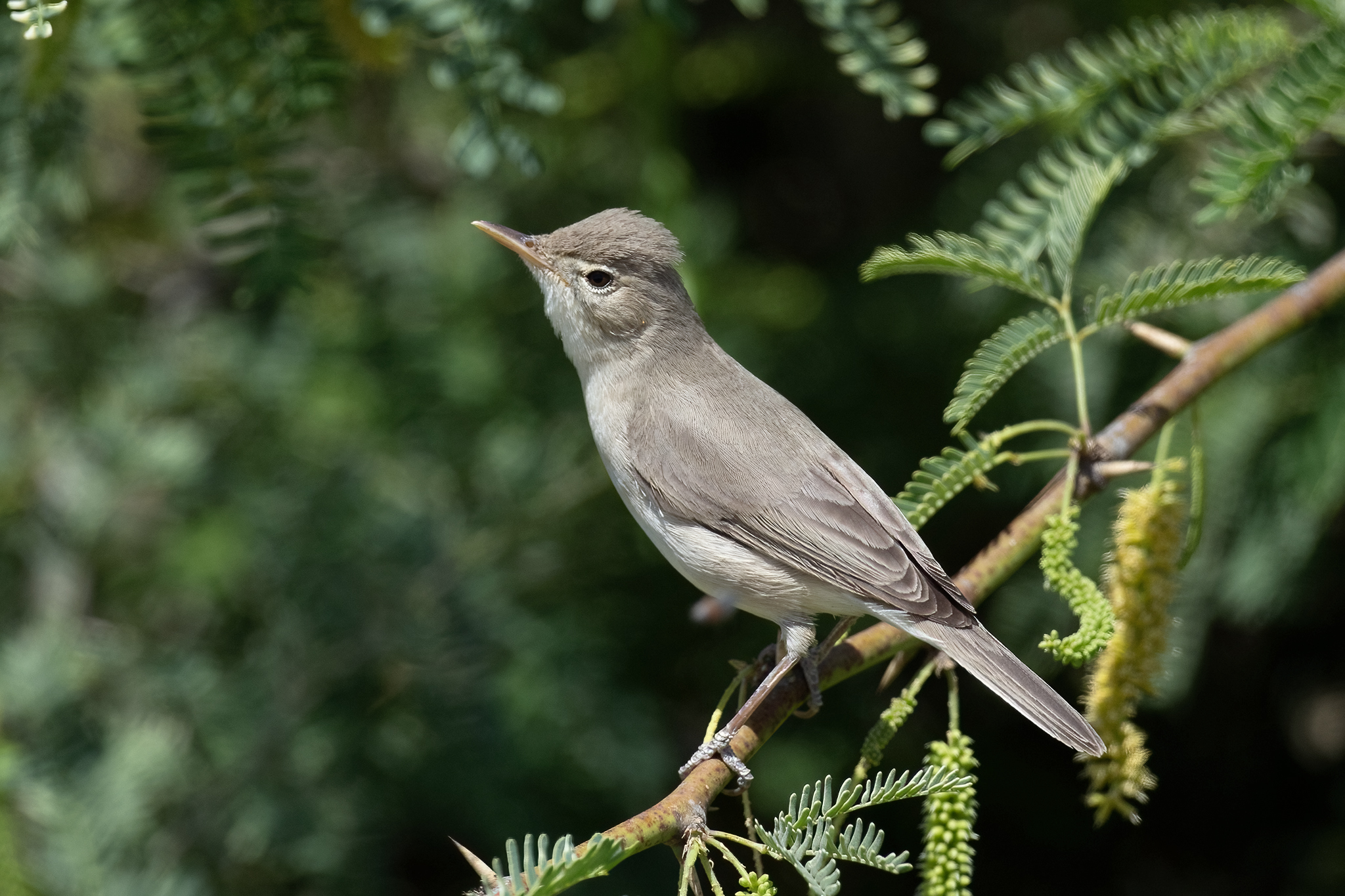
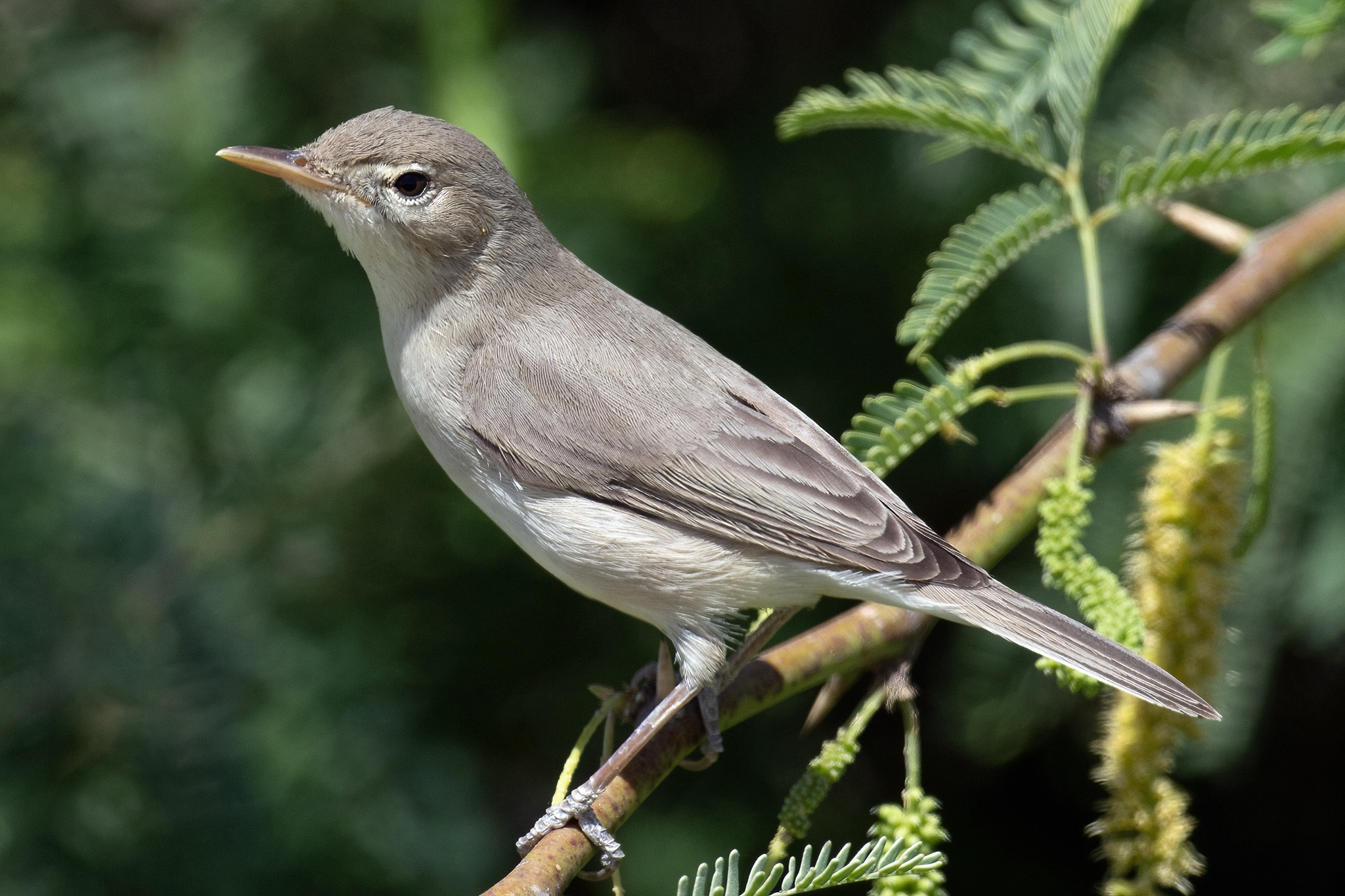
on insects and fruits, making it hard to notice. Habitat & Behavior This bird thrives in semi-open areas with scattered bushes and tamarisk shrubs, particularly along the banks of grey water lagoons. It prefers habitats with partial vegetation cover and is often seen high in the canopy. Its shy and inconspicuous nature means it tends to avoid the ground, only taking flight when disturbed. Appearance & Physical Characteristics The Eastern Olivaceous Warbler has pale brown plumage with buff tones and a strong, pointed yellowish bill, which distinguishes it from similar species. It is smaller and more slender than the Reed Warbler. Its inconspicuous plumage and behavior contribute to its ability to blend into its environment. Call This warbler is known for its dry, harsh "chack" call, often repeated in quick succession. While it rarely sings during migration, its song is a repetitive, scratchy sequence of notes, typically delivered from a hidden perch within dense vegetation. Occasionally, it gives a simple harsh "tchek" sound. Size and Comparison The Eastern Olivaceous Warbler is smaller and more slender than the Clamorous Reed Warbler. It is closely related to the Upcher's Warbler, making it difficult to distinguish between the two in the field due to their similar appearance, except from tail movement, the Olivaceous tail movement up and down , while the uptcher is sides movement. Seasonal Presence The Eastern Olivaceous Warbler is primarily a passage migrant, observed in spring and autumn. It passes through regions like Qatar in small numbers during its migration. |





© 2026 Qatar Bird Observation Group