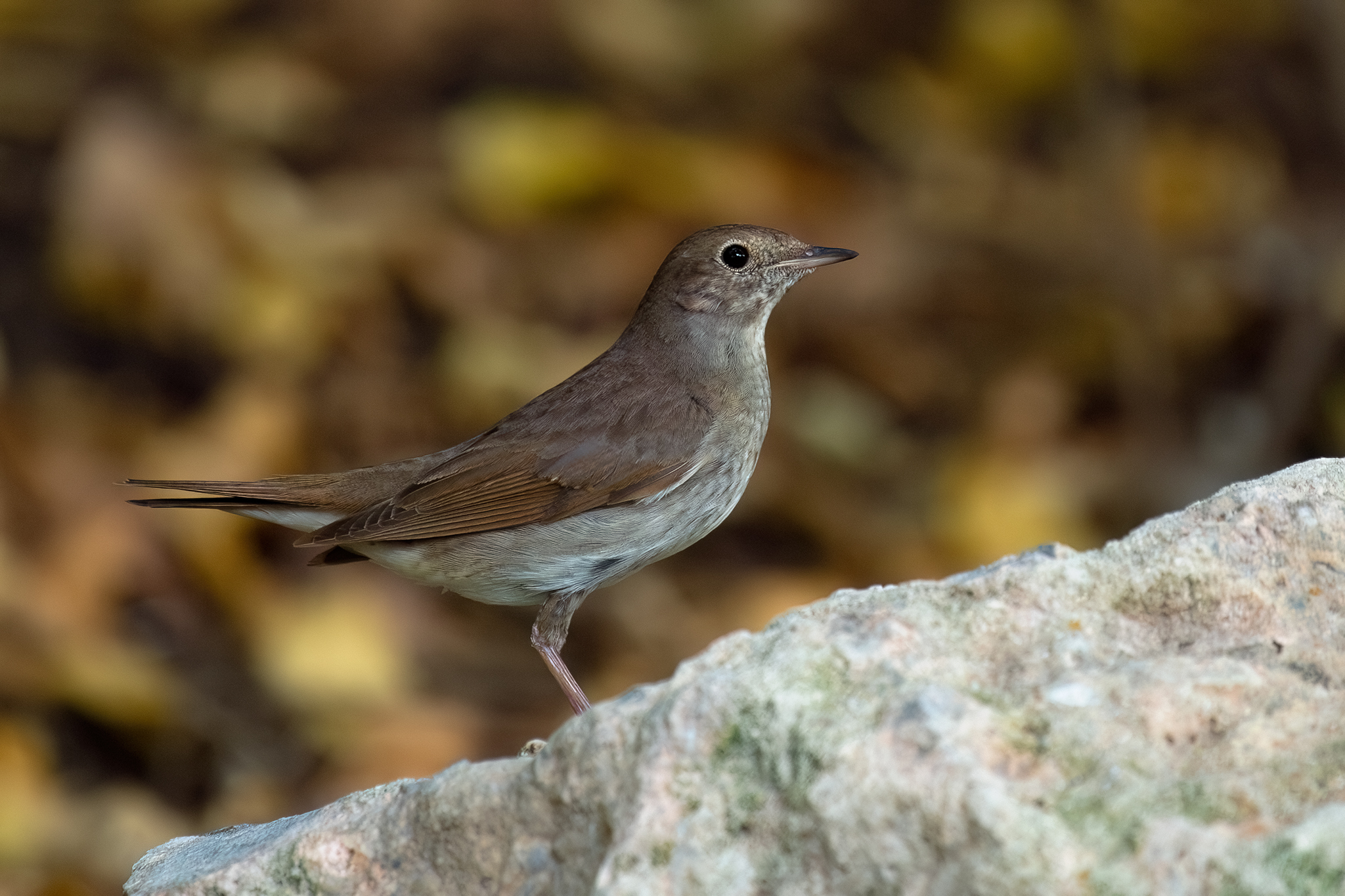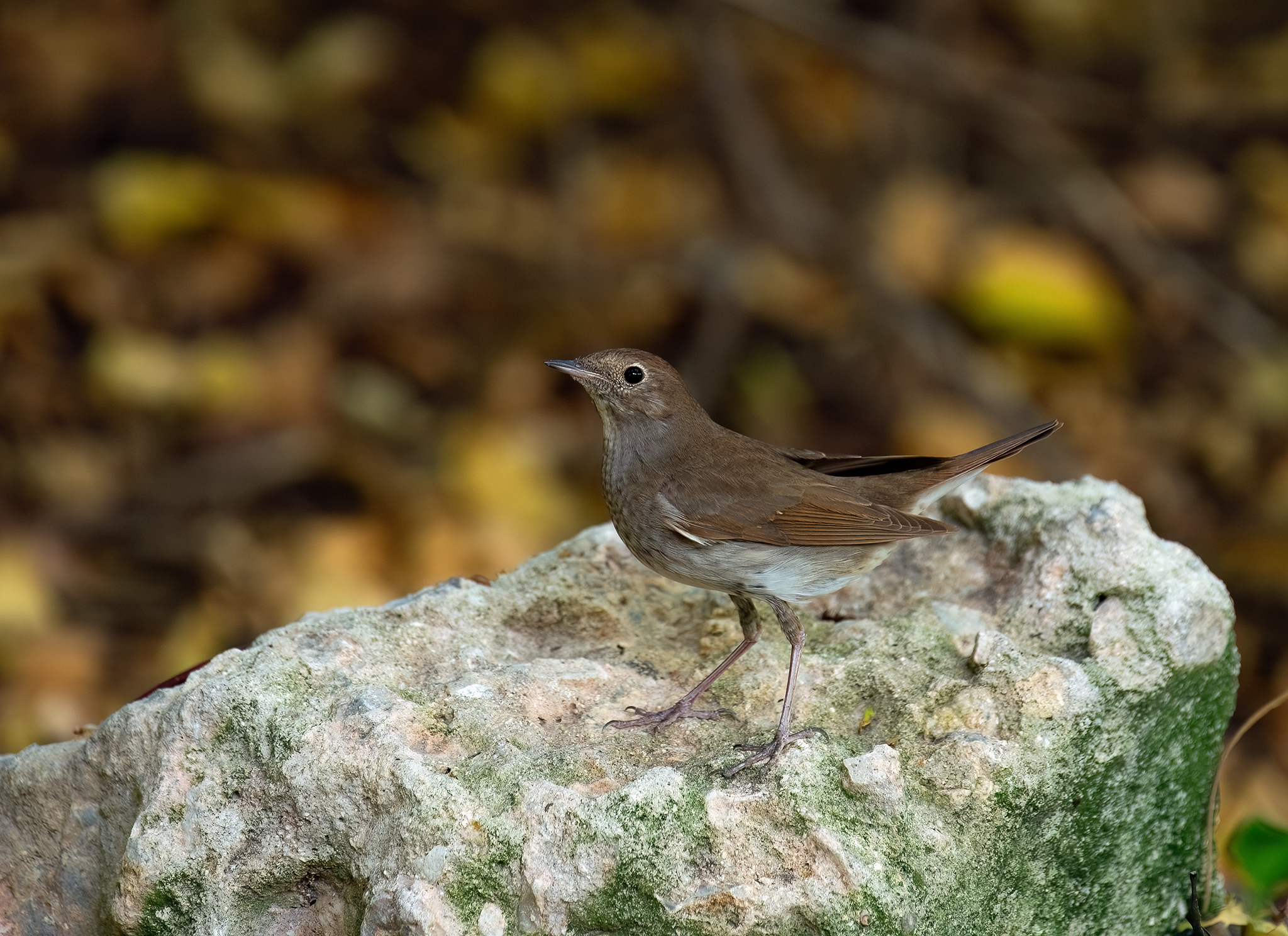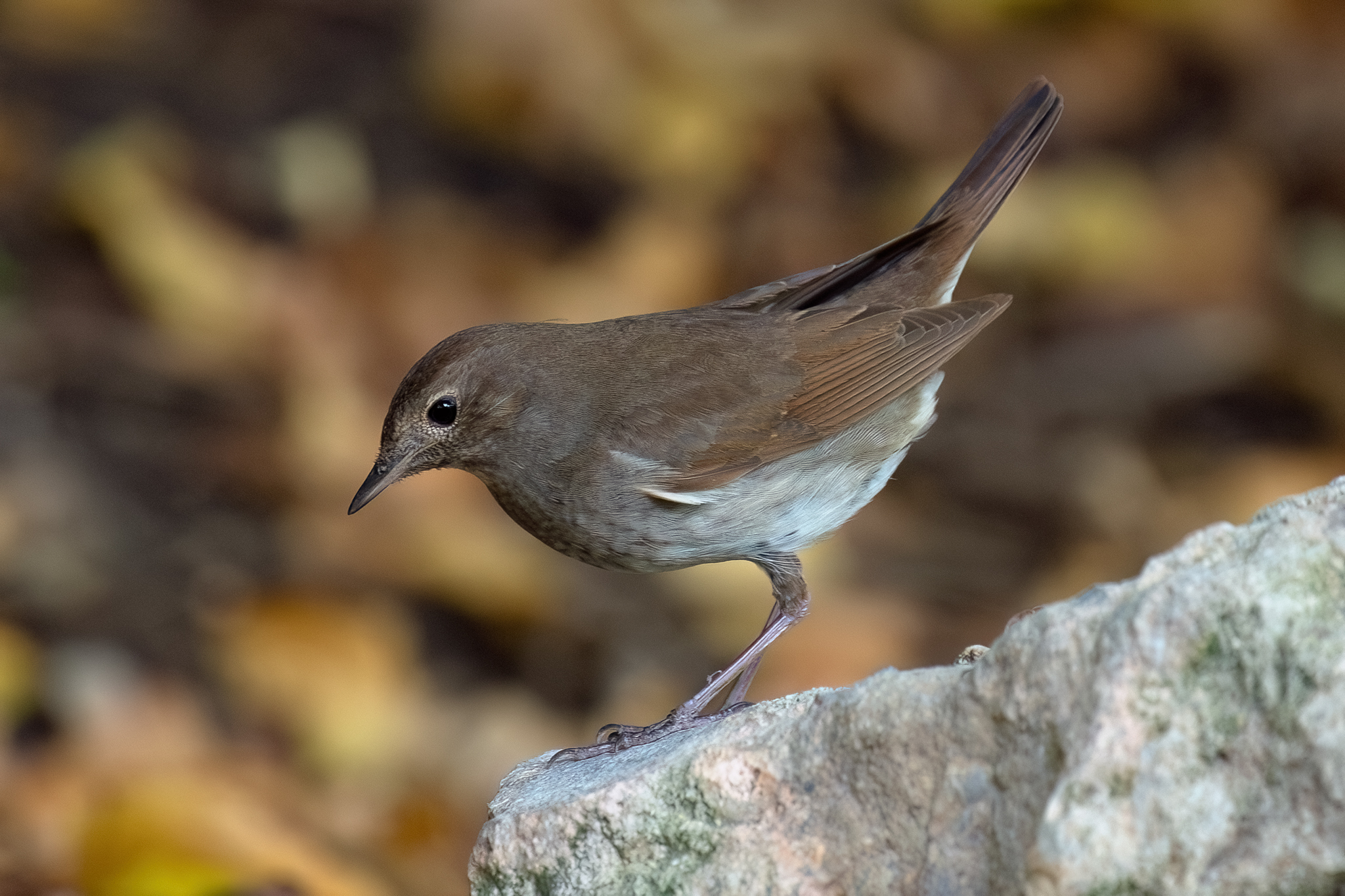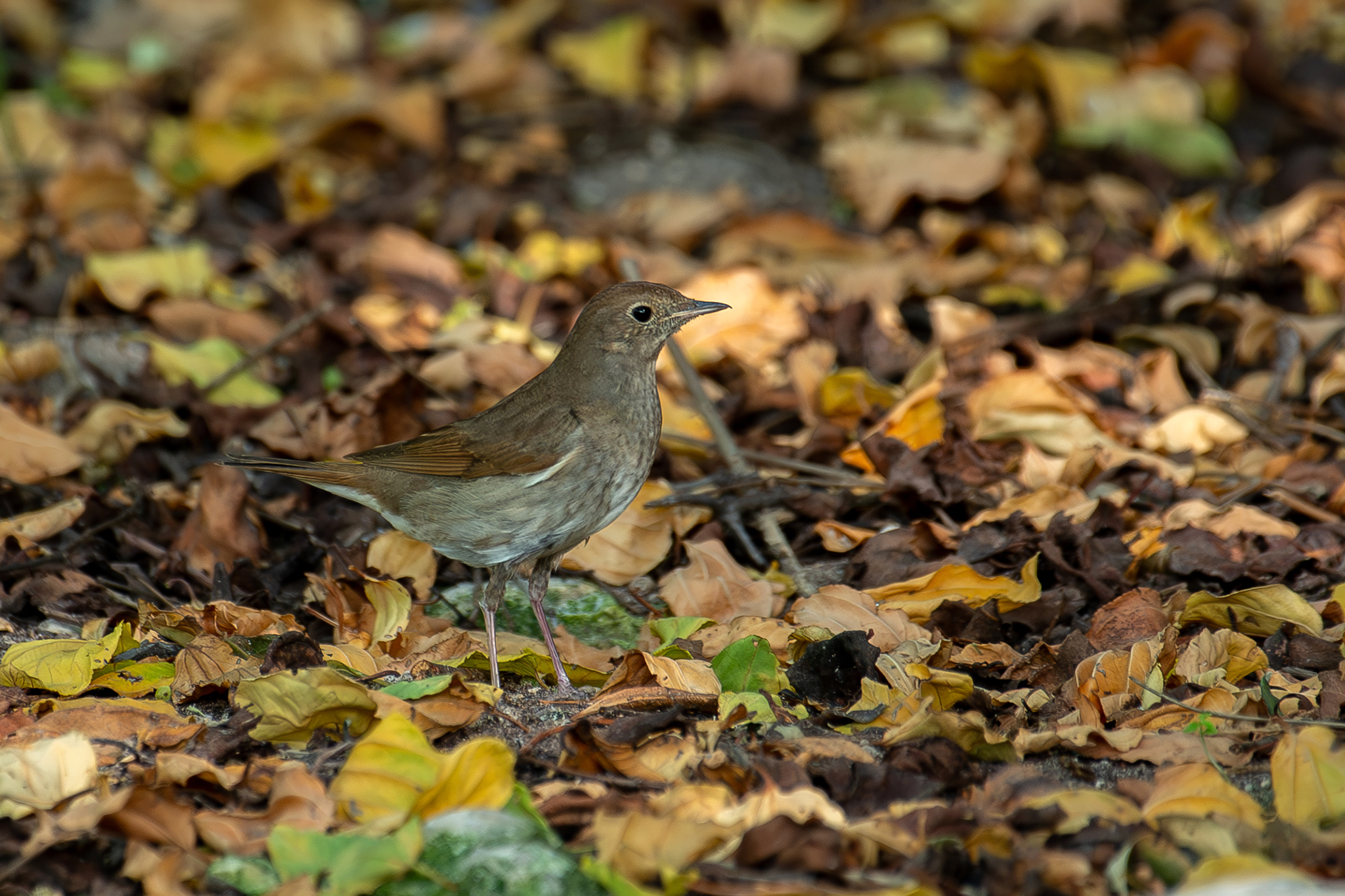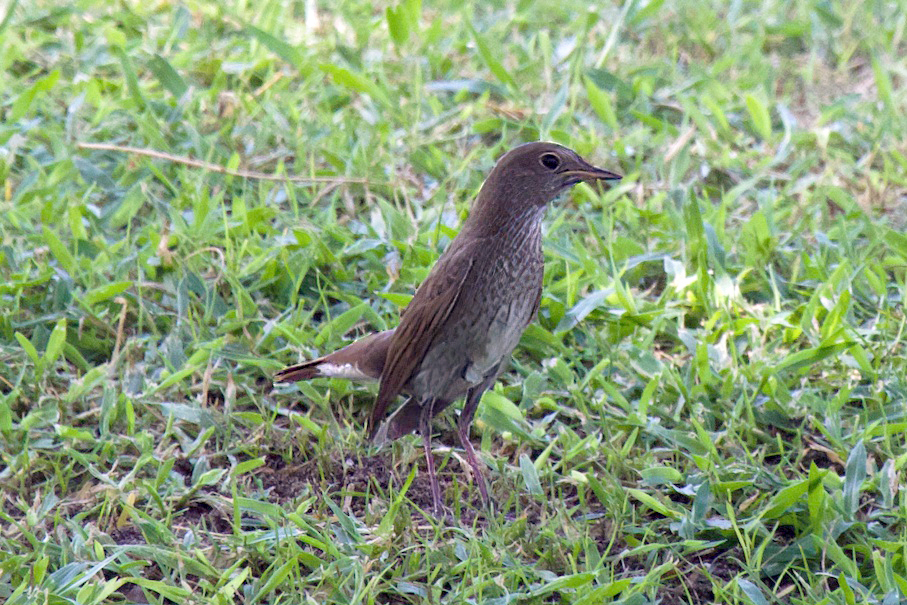




| The
Thrush Nightingale breeds in Eastern Europe and Siberia and winters in East
Africa. It prefers wetter habitats like riverbanks and marshy woodlands, with
darker greyish-brown plumage and mottled markings. Its song is less melodious
and more mechanical, and it is more elusive than other nightingale
species. In Qatar we have 3 Nightingales: 1. Luscinia (megarhynchos) megarhynchos (Common Nightingale) Distribution: Found across Europe, North Africa, and parts of Western Asia during the breeding season. Winters in sub-Saharan Africa. Habitat: Prefers dense thickets, woodland undergrowth, gardens, and parks with plenty of vegetation. Appearance: Warm brown upperparts with buff underparts. Rust-colored tail, often more vibrant than similar species. Pale eye-rings. Song: Famous for its melodious, rich, and varied song. The song includes whistling, trills, and rhythmic tones that are widely recognized as iconic. Behavior: Often found low in vegetation or on the ground, foraging for insects and small invertebrates. Migrates between Europe and Africa during spring and autumn. 2. Luscinia (megarhynchos) golzii (Eastern Nightingale or Golzii Nightingale) Distribution: Found in Central Asia, ranging from Eastern Iran to parts of Siberia. Winters in the Indian subcontinent. Habitat: Typically found in drier environments compared to L. megarhynchos, such as semi-arid scrubland and steppe regions. Appearance: Similar in size and shape to L. megarhynchos, but paler overall. Less vibrant reddish tones on the tail compared to L. megarhynchos. Subtle differences in plumage, such as a slightly duller and sandier coloration. Song: Similar to the Common Nightingale but slightly less elaborate and softer. Still includes melodious trills and whistles. Behavior: Like the Common Nightingale, it forages on the ground and among low vegetation, but it is more adapted to open, dry habitats. 3. Luscinia luscinia (Thrush Nightingale) Distribution: Breeds in Eastern Europe and parts of Siberia. Winters in East Africa. Habitat: Found in wetter environments compared to both L. megarhynchos and L. golzii, such as riverbanks, marshy woodlands, and damp thickets. Appearance: Slightly darker and greyer plumage than the Common Nightingale. Breast and flanks have mottled, streaky markings, unlike the clean, uniform look of L. megarhynchos. Rust-colored tail, but less vibrant than L. megarhynchos. Pale eye-rings, similar to the Common Nightingale. Song: The song is less melodious and more mechanical or harsh compared to the Common Nightingale. It lacks the elaborate, lyrical quality of L. megarhynchos. Behavior: More elusive and secretive than the Common Nightingale. Found near water sources and wetter areas during migration and breeding. Here is a summarized comparison of the three species: Luscinia (megarhynchos) megarhynchos (Common Nightingale): Found in Europe, North Africa, and Western Asia; winters in sub-Saharan Africa. Prefers dense thickets, woodlands, and gardens. Warm brown plumage, buff underparts, vibrant rust-colored tail, and pale eye-rings. Famous for its rich, melodious, and varied song. Forages on the ground and in dense vegetation. Luscinia (megarhynchos) golzii (Eastern Nightingale): Found in Central Asia, Eastern Iran, and Siberia; winters in the Indian subcontinent. Inhabits drier environments like semi-arid scrublands and steppe regions. Paler, sandier plumage with less vibrant rust-colored tail compared to the Common Nightingale. Softer and less elaborate song. Adapted to open, dry habitats but exhibits similar behavior to the Common Nightingale. Thrush Nightingale (Luscinia luscinia): Found in Eastern Europe and Siberia; winters in East Africa. Prefers wetter habitats, such as marshy woodlands and riverbanks. Darker greyish-brown plumage with mottled markings on the breast and flanks; less vibrant rust-colored tail. Song is harsher and less melodious than the Common Nightingale. More secretive and typically found near water sources. In summary, the Common Nightingale is vibrant and melodious, the Eastern Nightingale is paler and adapted to dry areas with a softer song, and the Thrush Nightingale is darker, more secretive, and associated with wetter habitats. Summary of Key Differences: Geographical Range: Megarhynchos is more westerly, while Golzii is found further east. Habitat Preferences: Megarhynchos prefers dense woodlands, while Golzii is found in drier, more open areas. Physical Differences: Golzii is slightly paler with less vibrant coloration. Song: Slight differences in complexity and tone. These distinctions are often subtle and may require expert observation to differentiate in the field, especially where their ranges overlap. |





© 2026 Qatar Bird Observation Group