



| The
eastern Black Redstart is a common winter visitor and passage migrant in
Qatar, commonly observed from November to February, with peak sightings in
January. Known for its active foraging and distinctive red tail display. Its
tail-bobbing behavior and striking appearance make it a captivating presence
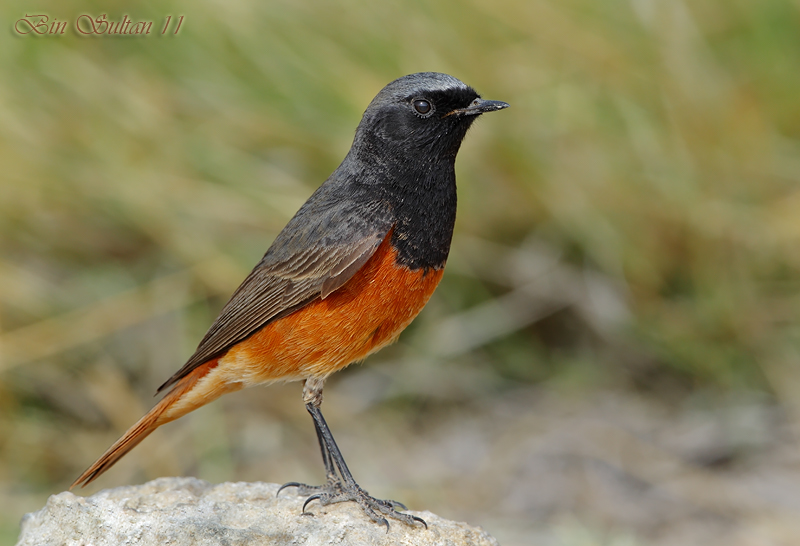
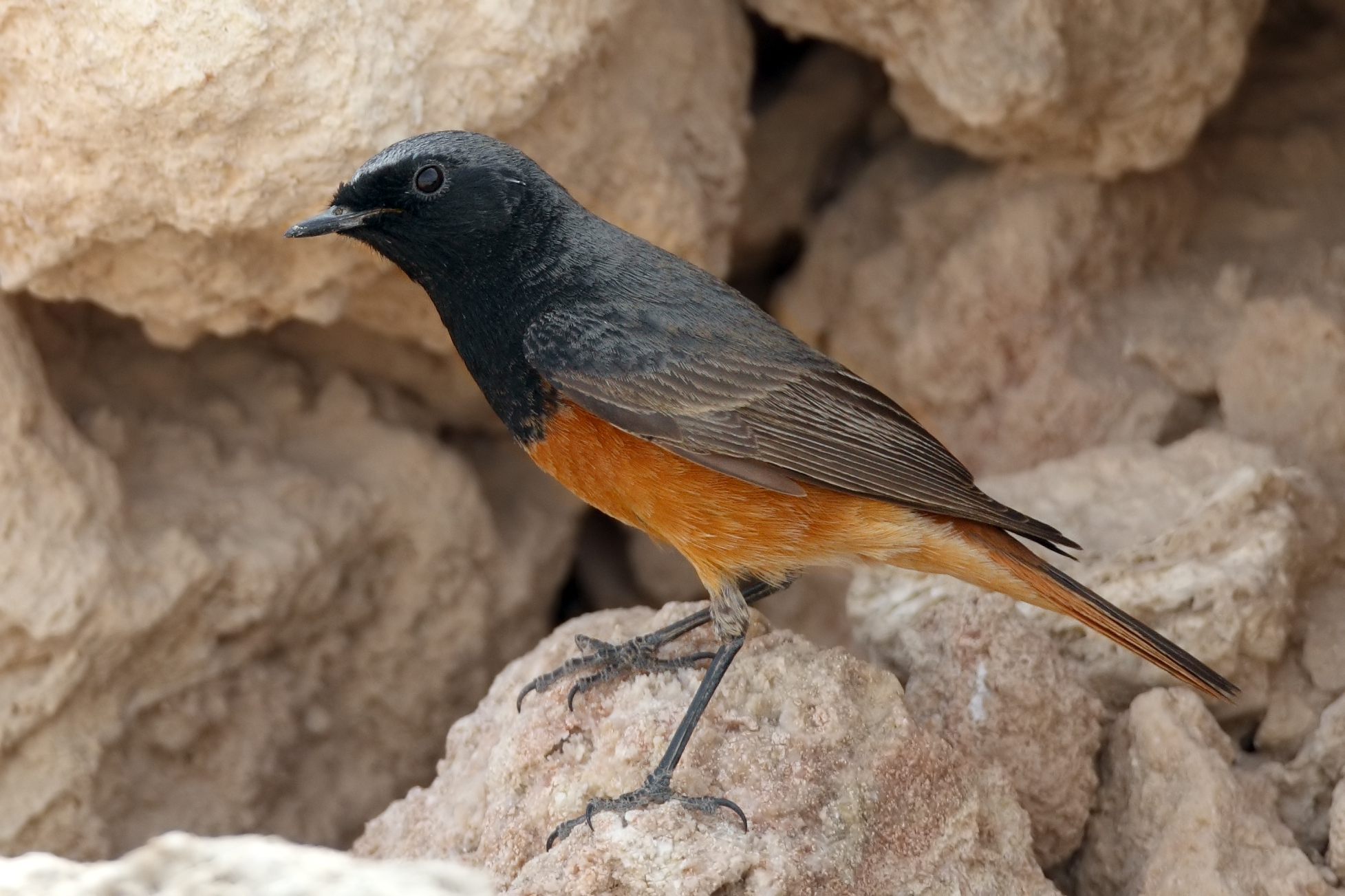
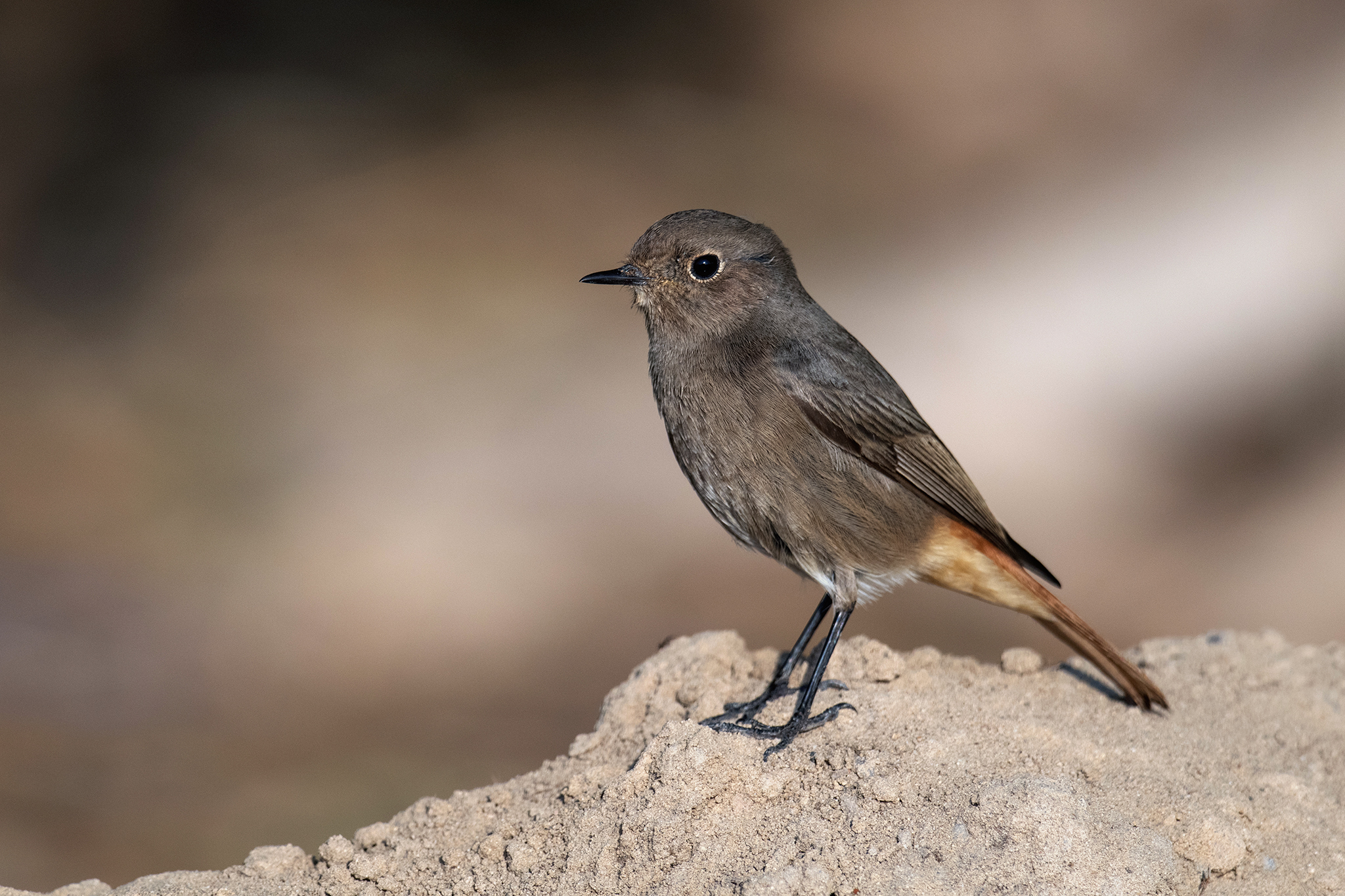
during the cooler months. Habitat & Behavior The eastern Black Redstart is highly adaptable and thrives in various habitats. It is commonly seen in areas with trees, bushes, or scattered vegetation, where it perches to hunt insects. Along shorelines, it feeds on small crustaceans and insects left by the tide. The bird is frequently observed on rocks, posts, or elevated surfaces, scanning for prey. It actively hunts by launching mid-air attacks or foraging on the ground. Its characteristic tail-bobbing and quivering movements, shared with the Common Redstart, make it easy to identify by behavior. Appearance & Physical Characteristics Males: Two distinct forms are commonly seen: One form has a black and grey appearance below. Another form features a combination of black on the breast and red below. Males in Qatar typically show an extensive black breast with rufous (reddish-brown) underparts, which helps distinguish them from the Common Redstart. Females: Display a plain greyish-brown coloration with a signature red tail. They are generally darker than female Common Redstarts but lack the vibrant colors of the males. Size and Comparison The Black Redstart is similar in size to the Common Redstart but is distinguished by its extensive black on the male's breast, the reddish-brown underparts, and its tail pattern. Female Black Redstarts are darker and plainer than their Common Redstart counterparts, aiding in identification. Seasonal Presence The Eastern Black Redstart is primarily observed during the winter months from November to February, with the highest number of sightings in January. It occasionally overlaps with the Common Redstart during late spring, requiring careful identification during that time. |





© 2026 Qatar Bird Observation Group