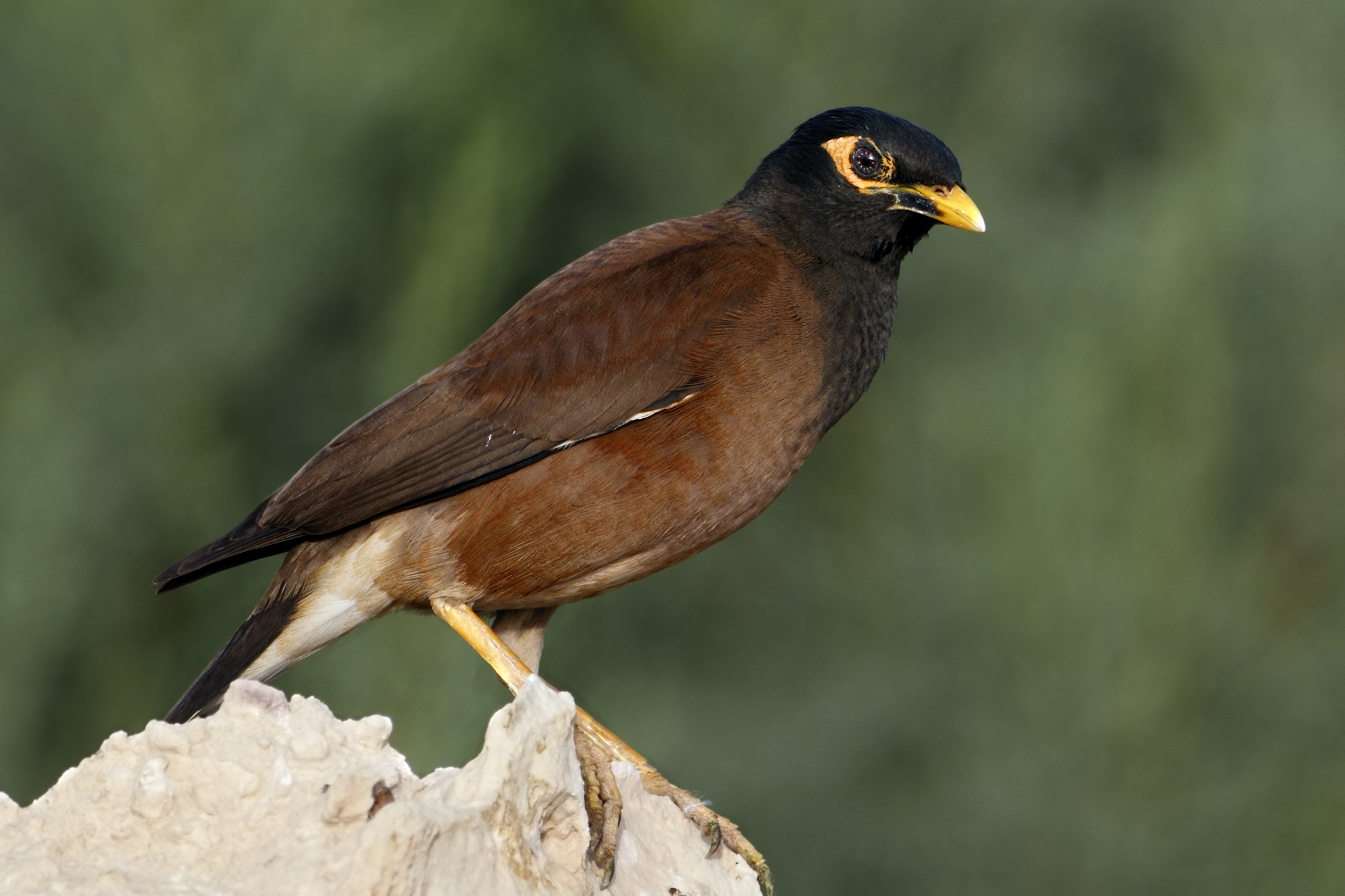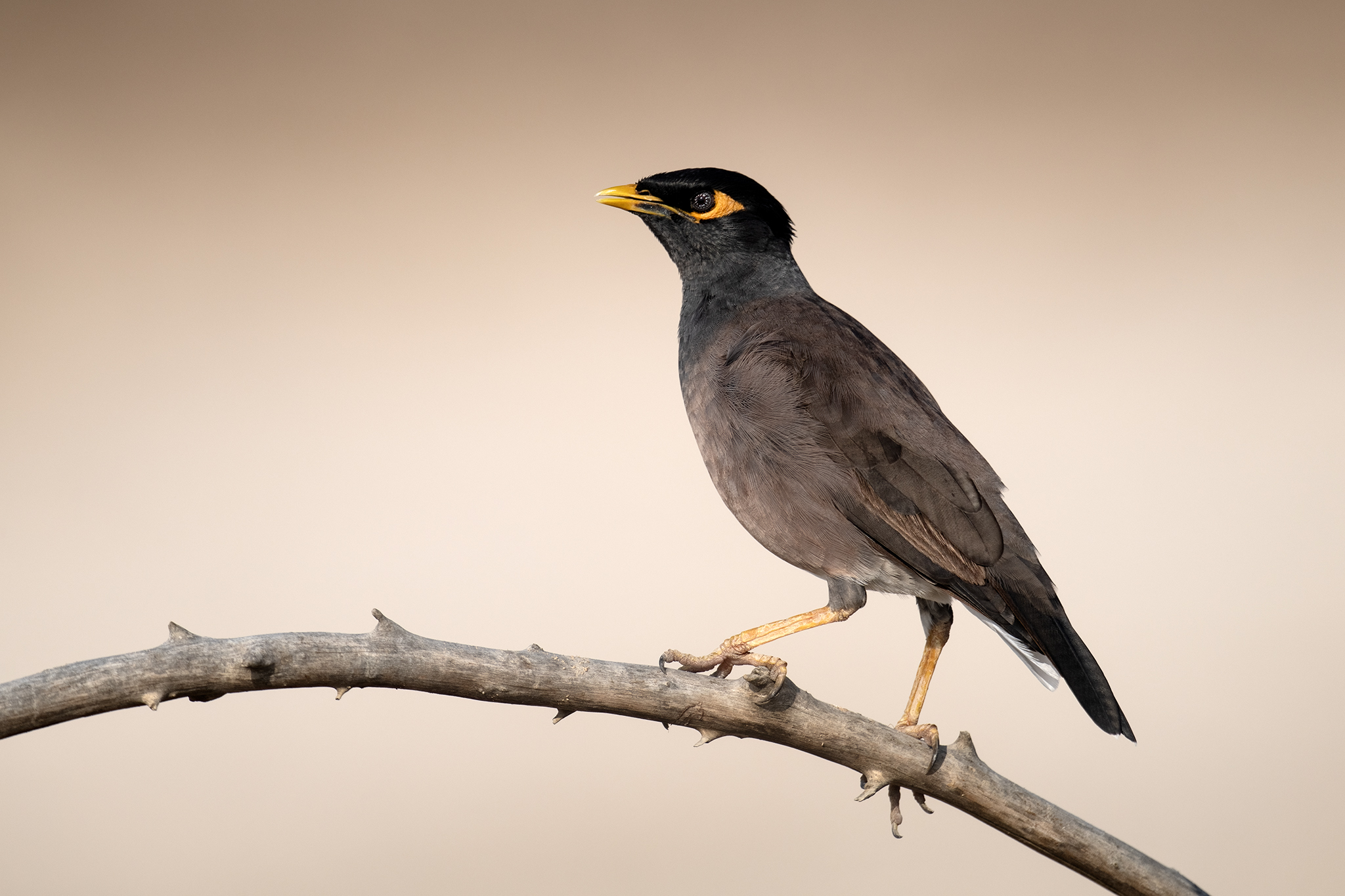




| The
Common Myna is a highly adaptable bird that has become widespread in Qatar
over the past three decades. Originally introduced from the Indian
subcontinent, it is now firmly established and is commonly seen in urban
areas, gardens, and farmland. Its noisy and bold behavior makes it one of
Qatar’s most recognizable bird species. Habitat & Behavior The Common Myna thrives near human activity and is often seen in urban areas, parks, and cultivated land. It frequently perches on trees, bushes, fences, buildings, and lampposts, where it produces a variety of loud whistles, squawks, and clicks. Large colonies are known to roost in date palms, particularly at the Doha Corniche, with noisy flocks returning at sunset. On the ground, it walks awkwardly as it searches for food in parks, streets, and residential areas. It has also been observed nesting in traffic light structures during the hot months of April and May. Appearance & Physical Characteristics In Flight: Displays noticeable white patches on its wings, making it easy to identify while flying. On the Ground: Bold and active, often seen strutting and foraging in open areas. Size and Comparison The Common Myna is medium-sized, slightly larger than sparrows but smaller than crows. Its distinctive white wing patches and bold behavior make it easy to distinguish from other birds in urban environments. Seasonal Presence The Common Myna is a year-round resident in Qatar, breeding and thriving in both urban and rural areas throughout the year. |





© 2026 Qatar Bird Observation Group