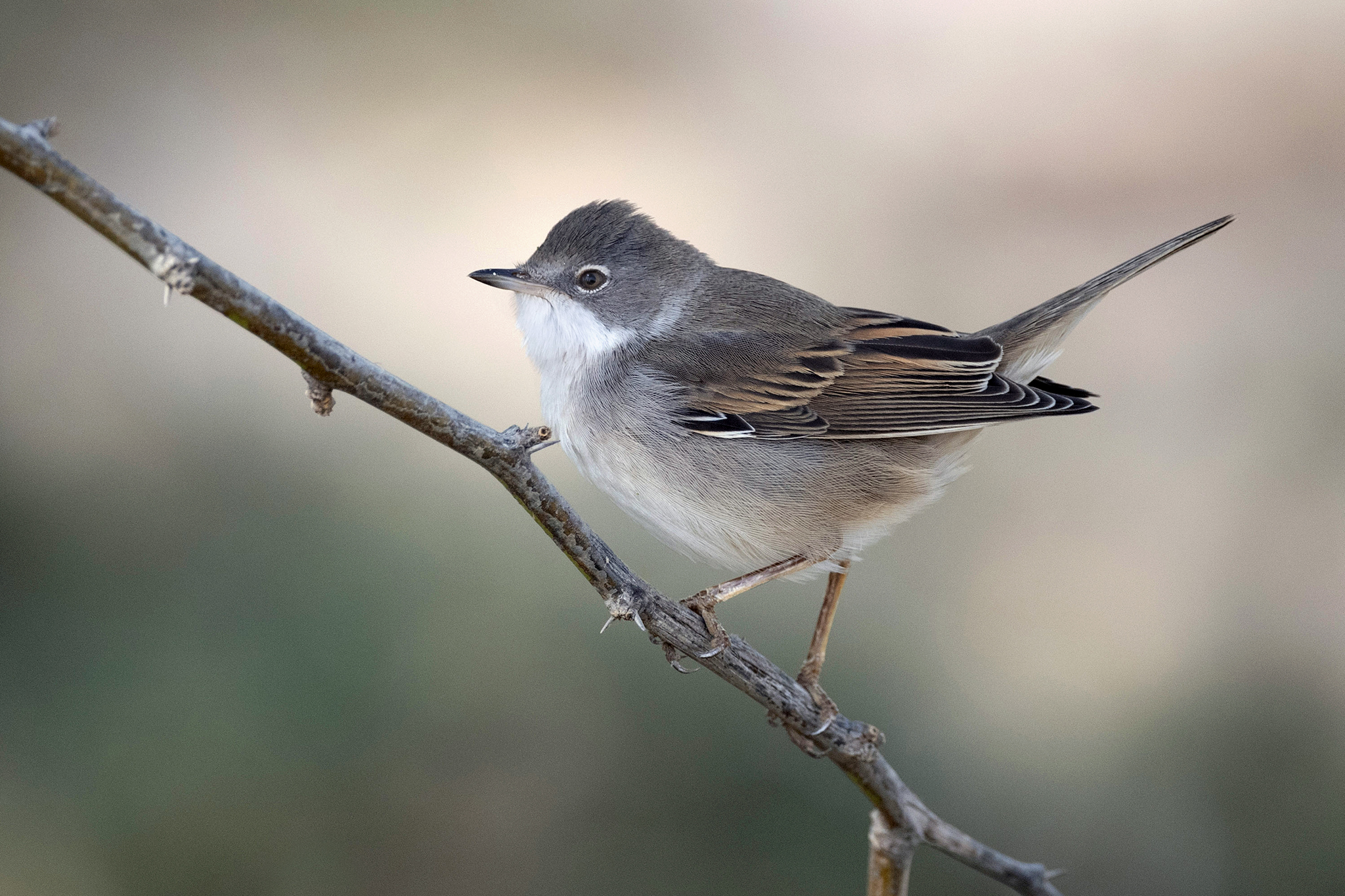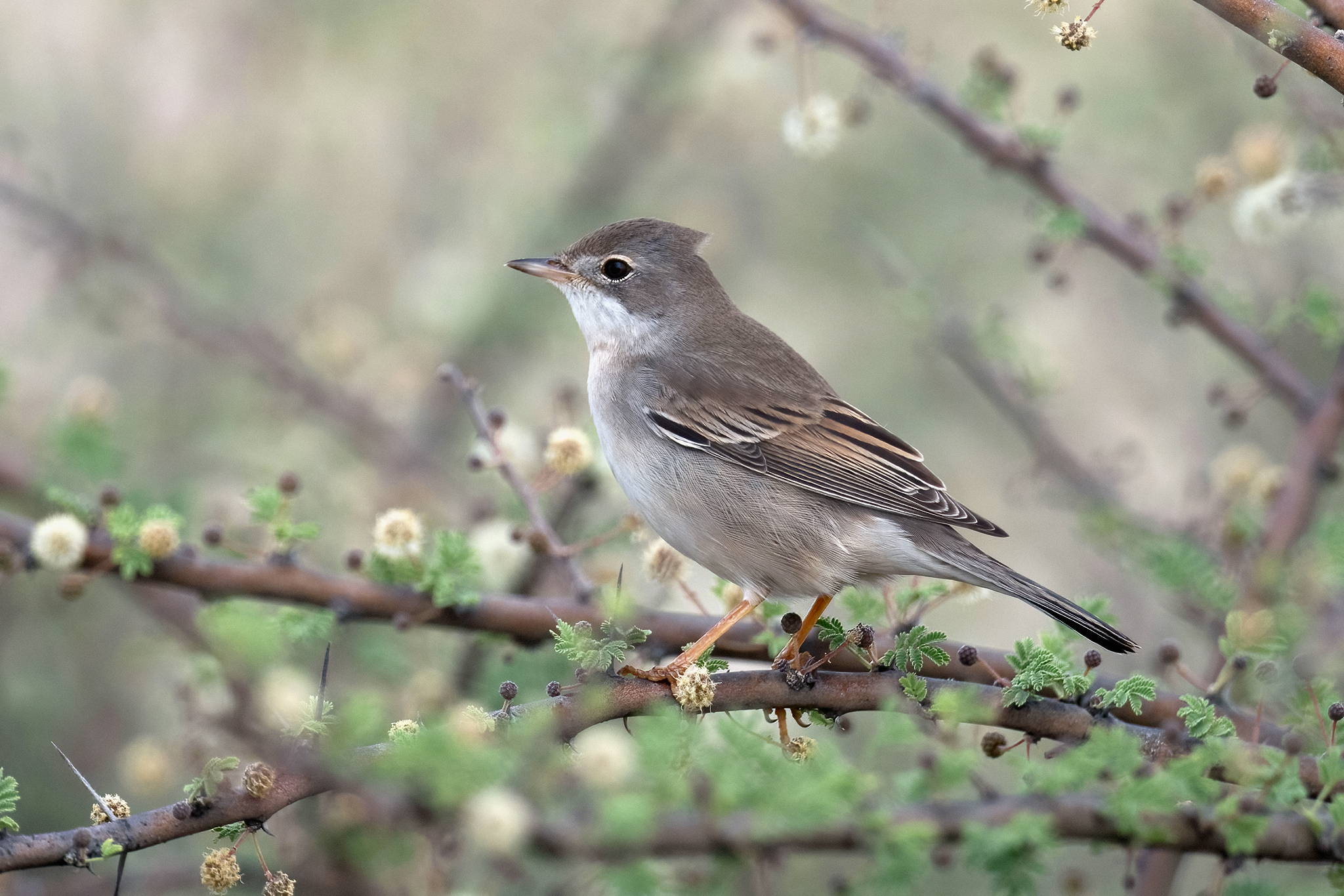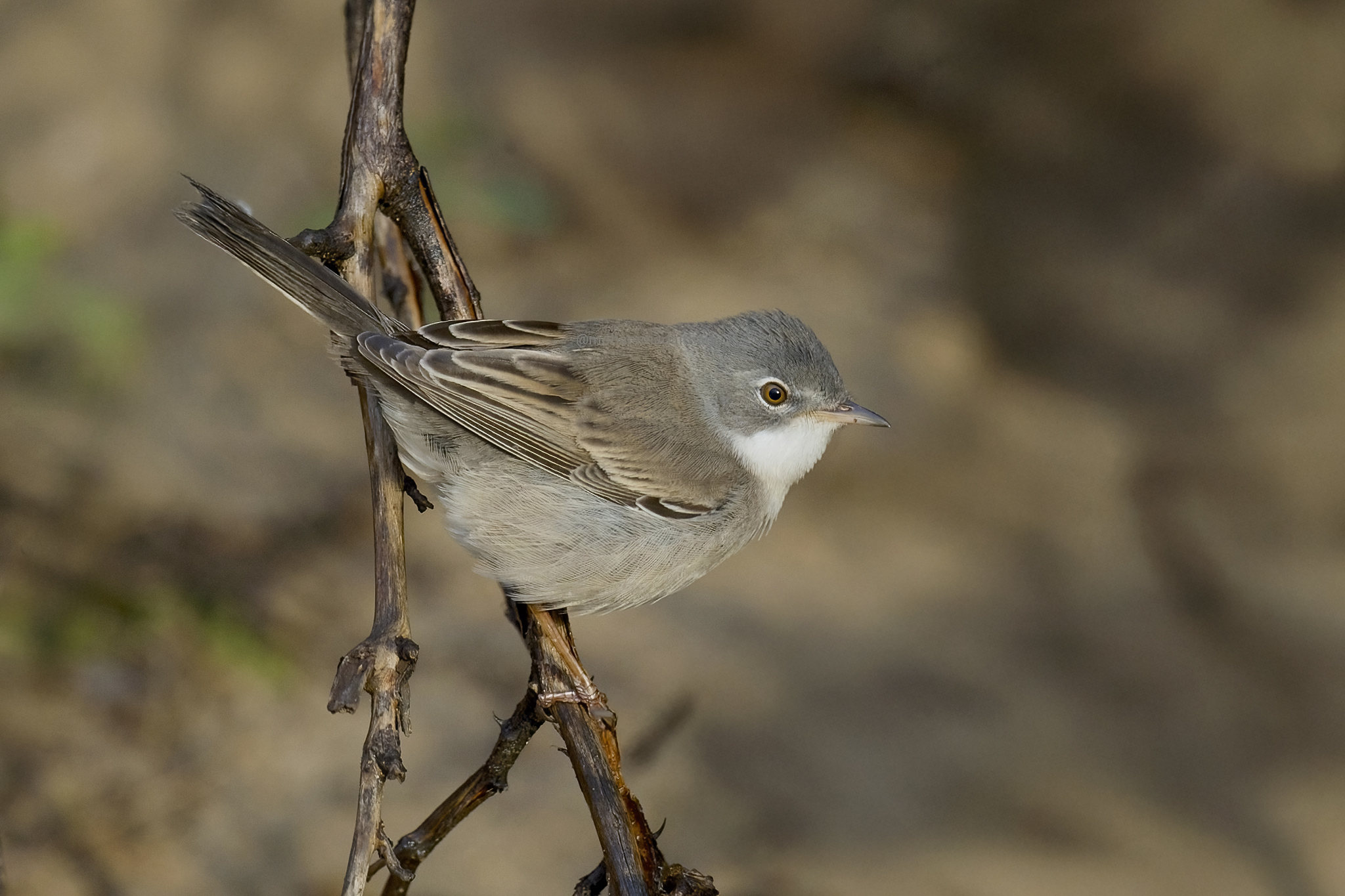




| The
Common Whitethroat is a medium-sized warbler that occurs as a passage migrant
during spring and autumn. It is one of the more easily recognized warblers
due to its distinctive white throat, pinkish breast, and rufous-edged wings.
Two forms are observed: one where the male has a slate-grey back and another
with a brownish back. Females and juveniles in both forms have sandy-brown
backs. In flight, its white tail sides are prominent. This bird can often be
found in parks, gardens, and areas with desert vegetation, such as
oases. Habitat & Behavior This bird prefers areas with abundant vegetation and is known for its quick, darting movements among plants while flicking its tail. Its primary diet consists of insects, but it will also consume dates left on palm trees during migration. It is active and agile, frequently foraging among foliage. Appearance & Physical Characteristics The Common Whitethroat is slightly larger than its close relative, the Lesser Whitethroat. Its distinctive features include a gleaming white throat, pinkish breast, rufous edges to the wings, and orange legs. The bird also exhibits noticeable white sides to the tail during flight, making identification easier. Male coloration can vary between slate-grey and brownish backs, while females and juveniles have sandy-brown backs. Call The Common Whitethroat is known for its rapid and scratchy melody, which has a somewhat scolding tone. Its typical call is a hoarse, nasal sound that resembles "wed-wed" or "woid-woid." When alarmed, it emits a rough, drawn-out "tschehr." Size and Comparison This bird is slightly larger than the Lesser Whitethroat, differing in key features such as its bright white throat, reddish-brown wing edges, and prominent white tail sides. Its coloration and markings make it more distinguishable than its close relatives. Seasonal Presence The Common Whitethroat is a passage migrant observed mainly in spring and autumn. It is known to pass through regions such as Qatar during its autumn migration and is commonly seen in areas with vegetation during these periods. |





© 2026 Qatar Bird Observation Group