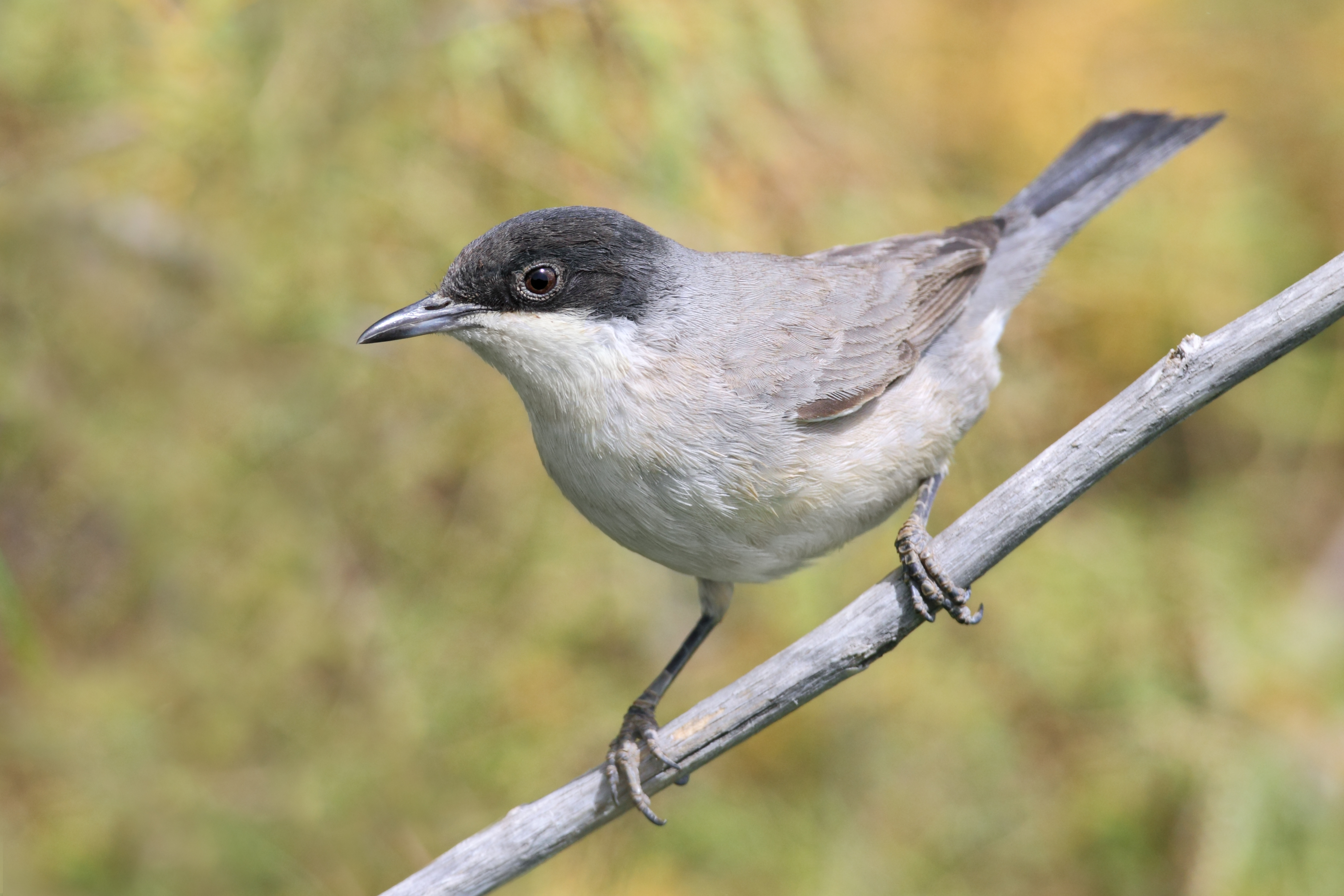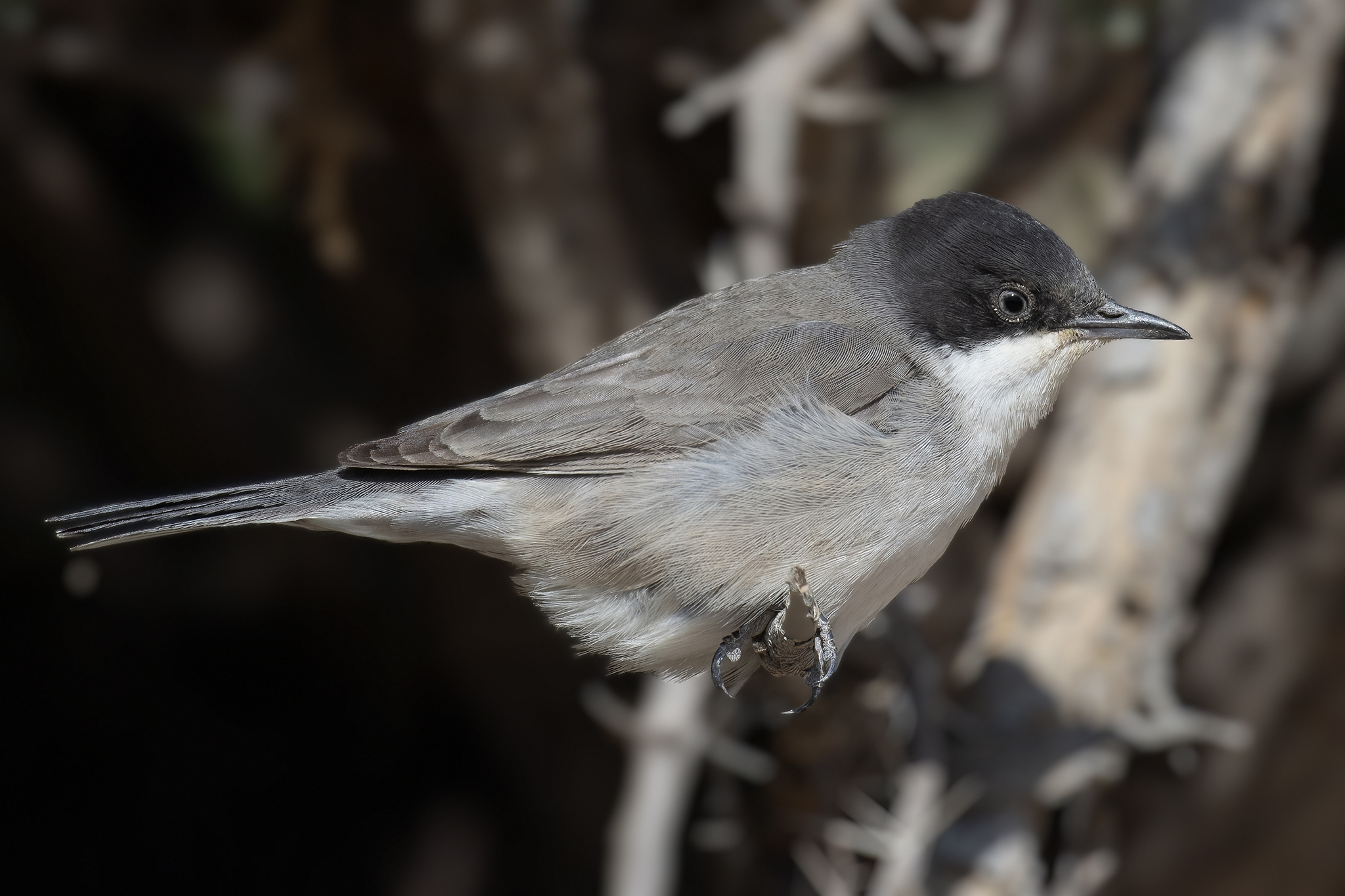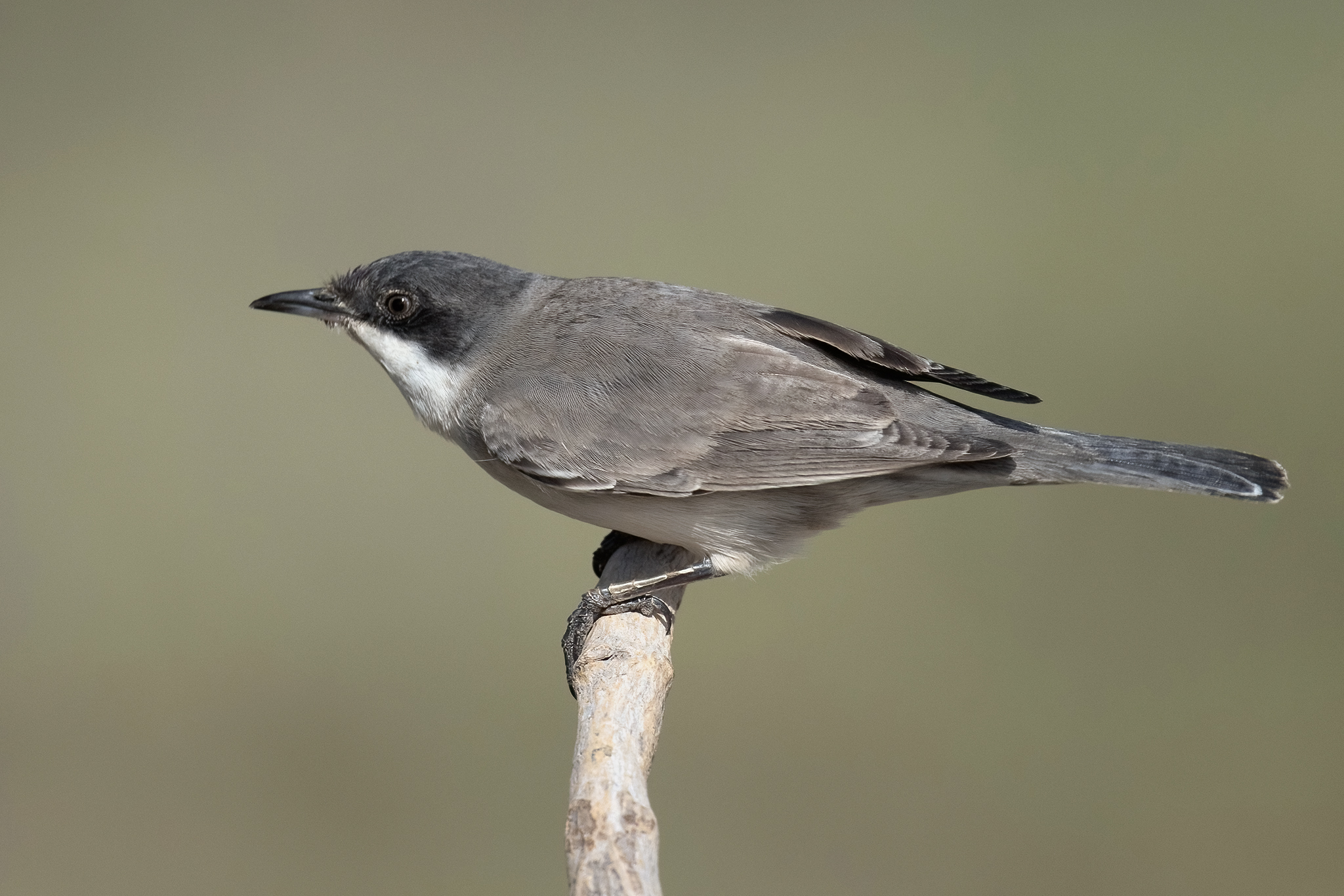




| The Eastern Orphean Warbler is a scarce passage migrant and one
of the largest warblers. This bird is typically observed during its migration
and is known for its distinct size compared to other warblers. Habitat & Behavior This shy bird is occasionally found in areas with trees and bushes. It tends to keep a low profile, making it less noticeable despite its size. Appearance & Physical Characteristics Adult males have a dark grey head with a darker patch on the cheek extending back from the eye. They also feature a grey back, a white throat, and light-colored underparts. Females are brownish-grey with a paler head and buff-colored underparts. Call The Eastern Orphean Warbler is known for its distinctive vocalizations. Its song comprises a series of melodious warbling notes interspersed with scolding tones, often described as "liroo-liroo." This song is more varied than that of the Western Orphean Warbler, approaching the richness of a Nightingale's song. Additionally, its call is a dry, harsh "chack," frequently repeated in quick succession. Size and Comparison The Eastern Orphean Warbler is one of the largest warblers, standing out due to its size and distinct plumage. It can be identified by the darker markings on males and the paler coloration of females. Seasonal Presence This bird is observed as a passage migrant, primarily during September and occasionally in areas with suitable vegetation. |





© 2026 Qatar Bird Observation Group